A 5.5% sales boost followed Unilever’s largest sports partnership. Rani Al Hajji explains how 35 brands and thousands of creators engaged fans in over 120 markets. The campaign set new standards for global brand activation.
Unilever’s approach to the Fifa World Cup 2026 offers a blueprint for publishers and content leaders seeking to drive engagement and revenue through large-scale, multi-brand activations. The company credited the tournament with a 5.5% sales increase, achieved by mobilizing 35 brands and more than 50,000 creators across 120 markets. Rani Al Hajji, chief growth and transformation officer for Personal Care, outlined how Unilever adapted its strategy to meet the demands of a more connected, real-time audience.
Each brand in Unilever’s portfolio was assigned a distinct role tailored to both its product and the fan experience. Rexona focused on confidence under pressure, with branding placed on fourth officials’ armpits and substitution boards-a first for the World Cup. Dove centered its efforts on supporting young female football fans and players, launching the ‘Game Is Ours’ campaign with a film built from the sounds of girls playing. Dove Men+Care addressed the physical realities of fandom, encouraging fans to ‘Care for Your Skin Like You Care for the Game.’ AXE leaned into the playful side of football culture, urging fans to ‘smell your best when you look your worst,’ and partnered with creators like Rio Ferdinand and Deji to reach over 50 million people during the England versus Argentina semifinal.
Unilever’s activation strategy relied on creators to deliver authentic content within football culture. The company worked with football stars, freestylers, and micro-influencers, recognizing that each brought unique strengths to the campaign. The Rexona New York Sweat Club, part of House of Fresh, brought together creators and media for football challenges and a 360-degree content experience, generating over 1 billion in reach. Content from Roberto Carlos, Kerolin, Daniel Sturridge, and Ben Foster added more than 36 million in additional reach. During the first six weeks, Rexona ranked fourth among all global sponsors for social share of voice.
Physical spaces in Mexico City, New York, and Miami allowed creators to produce content and respond to tournament moments in real time. The Locker Room, a 24/7 social content operation, helped Unilever teams track and amplify conversations gaining momentum. Al Hajji noted that content created in the authentic voices of creators traveled further than centrally scripted material, leading Unilever to give creators more freedom within a coherent brand strategy. This approach aligns with findings from recent reporting on creator-led World Cup engagement, which showed that creator-driven content often outperformed celebrity campaigns.
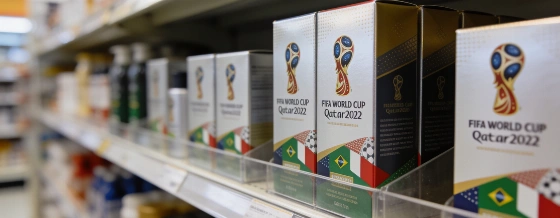
Unilever also ensured that its World Cup story extended to retail. More than 180 limited-edition products were distributed to millions of stores. Rexona released collectible cans featuring football ambassadors, AXE launched three limited-edition Fine Fragrance scents for Gen Z, and Dove used its Palo Santo & Sage range to drive QR-code ticket entries and donations supporting girls in sport. These products allowed fans to bring a piece of the tournament home and made daily routines feel special. Unilever measured success not just by reach, but by engagement, search, trial, and new-buyer recruitment, with long-term penetration as the ultimate test.
Looking ahead to the Fifa Women’s World Cup 2027, Unilever plans to build on this model, allowing the energy of each tournament and its communities to shape future activations. Al Hajji emphasized that the World Cup offers brands the largest stage in sport, but true relevance depends on thousands of choices made alongside fans and creators.
Unilever is one of the world’s largest consumer goods companies, operating in over 190 countries and employing more than 127,000 people as of 2026. Its Personal Care division includes global brands such as Rexona, Dove, Dove Men+Care, and AXE, each with significant market presence. The company reported annual revenues exceeding $60 billion in 2025, with personal care products accounting for a substantial share of its growth. Unilever’s ongoing investment in creator partnerships and multi-market activations reflects its commitment to maintaining cultural relevance and commercial momentum in a rapidly evolving global market.