
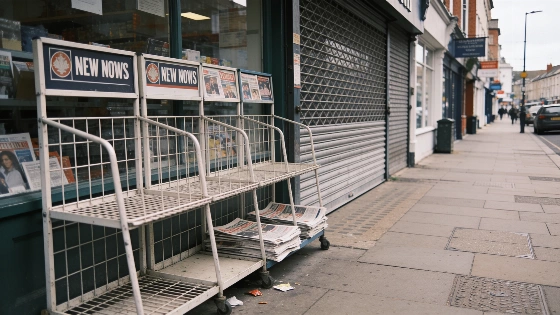
The Canary halted its national weekday print newspaper two weeks after launch, citing the closure of its Lloyds bank account and restricted access to funds. The publisher said it could not pay all staff. The print edition began distribution on May 26 through 6,500 newsagents across England and Wales, initially as a trial to assess whether the operation was viable. The Canary said it planned to relaunch the print product in the coming weeks but gave no timeline.
The print suspension was followed by further disruption to the publisher’s banking access. The Canary said Lloyds Banking Group had restricted access to a large sum; in September, a separate account with Metro Bank was also reportedly blocked. The outlet linked these banking problems to difficulties paying staff and contractors, as well as to its ability to keep operating. On October 19, The Canary announced that it would close indefinitely, saying: “The Canary will be closed for the foreseeable future. As of today, the Canary will be closed indefinitely.” In a statement reported by The National, the outlet described the year as marked by “multiple attacks,” including what it called Lloyds “debanking” and allegations of malicious claims by former employees.
The publisher’s account of payroll difficulties sits alongside a later statement about its obligations to staff. Morning Star reported that The Canary’s chief executive, Steve Topple, said staff had been paid and pension contributions made through the end of September. The same newspaper estimated that the outlet employed about 50 full- and part-time workers. Those figures are reported estimates, while Topple’s statement specifies the period covered by the reported payments.
Funding for the print launch came from a cash injection in 2025 by the founder of a used-car website. The project was described as the first launch of a new UK national newspaper since The New Day, which lasted two months under Reach, formerly Trinity Mirror. The Canary had also recently added three hires to support print content.
The Canary appealed for donations and said it could not rule out political motivations for the banking actions. It also suggested that other politically engaged organisations, particularly those with anti-Zionist or pro-Palestine positions, might have faced similar treatment. The reported account restrictions and their operational impact do not establish a political motive. The Financial Conduct Authority publishes firm-level complaints data, organised by firm and product with reporting periods. The tables provide aggregate information on complaints, not a determination of why an individual account was affected, as set out in its complaints data tables.
Support for The Canary came from independent media representatives and activists. Emily Apple, a former editor and media coordinator at Campaign Against Arms, described the situation as an attack on press freedom. Former Guardian columnist Jonathan Cook referred to previous advertiser boycotts and called the debanking inexplicable. Double Down News and Ash Sarkar of Novara Media also voiced concern; Sarkar urged Lloyds to clarify its rationale or reinstate the account. Peter Jukes and Carole Cadwalladr expressed support. Owen Jones and Greg Hadfield did too.
The Canary said financial instability would not deter its editorial mission and indicated that it planned to publish a response to what it called a “vicious campaign.” Lloyds Banking Group declined to comment on individual customer accounts.
Financial disruption and delayed payments are not unique to The Canary. For example, the Los Angeles Times has also faced vendor payment delays amid business challenges, highlighting broader risks for publishers navigating operational and financial pressures.








