A new campaign put Sweetgreen’s wraps in front of sports fans during the 2026 FIFA World Cup. The brand focused on digital out-of-home ads in key cities. Early data shows a significant lift in store visits.
Sweetgreen’s latest marketing push demonstrates how digital out-of-home advertising can drive real-world traffic for food brands during major sporting events. As the 2026 FIFA World Cup drew crowds to public venues, Sweetgreen partnered with Atmosphere TV to promote its new wraps, aiming to reach viewers gathered in bars, restaurants, and other high-traffic locations.
The campaign, which ran throughout the nearly six-week tournament from June 11 to July 19, was designed to align Sweetgreen’s portable wraps with the energy of live sports. According to Katie Sheeran, Sweetgreen’s VP of marketing, wraps were introduced in May and positioned as a convenient option for fans on the move-an approach that differs from the chain’s traditional salad offerings. Sheeran clarified that the campaign was not a response to recent concerns over a cyclospora outbreak affecting leafy greens, noting that Sweetgreen was not implicated in the incident.
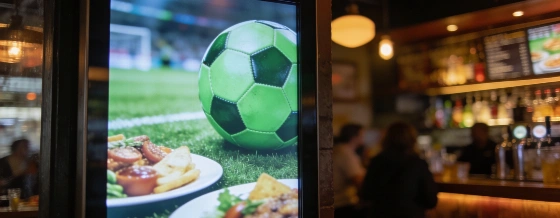
Atmosphere TV, a video advertising startup, provided the platform for Sweetgreen’s video ads in approximately 60,000 venues. The ads ran on Atmosphere TV’s free ad-supported TV (FAST) channels, often displayed alongside screens showing the World Cup. While Atmosphere TV does not define itself strictly as a DOOH platform, its technology allows brands to target audiences in real-world settings with a level of precision beyond traditional billboards. Ryan Spicer, Atmosphere TV’s CRO, described the platform as connected TV for out-of-home audiences, emphasizing its ability to deliver ads near store locations.
Sweetgreen’s campaign focused on its top regional markets-Chicago, Los Angeles, Boston, and Washington DC-rather than a broad national buy. The brand aimed to reach fans within two to three miles of its stores, increasing the likelihood of immediate visits. The video ad featured a green soccer ball with Sweetgreen branding and rotating images of the four wrap flavors, encouraging viewers to order online or via the app. This effort was part of a broader launch strategy that also included social videos with content creators on platforms like TikTok.
Early results from the campaign suggest a strong impact. Sweetgreen reported that audiences exposed to the ads on Atmosphere TV screens visited physical stores at a rate 113.9% higher than those who did not see the ads. However, the company did experience a 4.7% drop in foot traffic on July 18, attributed to consumer concerns over the cyclospora outbreak, according to CBS News. Despite this, Sheeran said the primary goal was to build brand awareness and favorability, with an expectation of increased store visits in targeted areas.
Atmosphere TV’s approach has attracted other advertisers seeking to capitalize on live sports audiences without the high costs of official sponsorship. During the World Cup, brands like Lowe’s, GMC, and Modelo also ran campaigns on the platform. Atmosphere TV reported that its World Cup campaigns delivered an average sales lift of over 20% for advertisers. The company expects that live sports will continue to drive in-person gatherings, creating valuable moments for brands to connect with engaged audiences. For more on how creators and brands leveraged the World Cup to reach fans, see this analysis of creator-driven engagement during the tournament.
Founded in 2007, Sweetgreen has expanded to over 200 locations across the United States. The company has focused on digital ordering and localized marketing to drive growth, with recent campaigns emphasizing new menu items and targeted regional outreach. Sweetgreen’s ongoing investment in digital and out-of-home channels reflects its strategy to capture audiences where they gather, especially during major cultural and sporting events.