
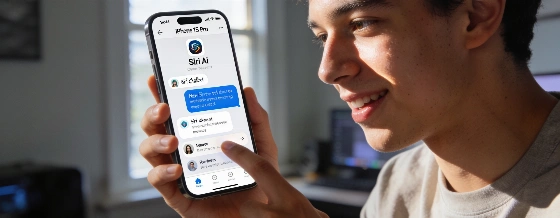
A major update brings Siri AI to iOS 27, offering a chatbot app, smarter context, and seamless access across the Apple ecosystem. Early users report a more helpful, intuitive assistant. Find out what’s changed and who can try it.
With the public beta release of iOS 27, iPhone owners can now experience Apple’s overhauled Siri AI for the first time. Unveiled at WWDC as “Siri AI,” the assistant moves beyond voice commands, introducing a chatbot-style app and tighter integration throughout the device.
Testing the developer beta, users found Siri AI more capable for everyday tasks-locating old vacation photos, sending quick texts, or recommending a breakfast spot-all from simple prompts. While not perfect, the new Siri feels more useful, especially for those who rarely used the previous version. Some features may even become daily habits.
Siri AI is now woven into the iPhone’s core. “They've integrated it across the entire ecosystem, so you can access Siri AI no matter where you are on the device,” said Nabila Popal, senior research director at International Data Corporation. Siri can be accessed by voice, through its dedicated app, or via search. Users still have the option to disable Siri, but the new features may prompt many to reconsider how they interact with their iPhones.
For those eager to try Siri AI, signing up for the Apple Beta Software Program is the first step. Backing up your device before installing beta software is recommended. After installing iOS 27, users must join Apple’s Siri wait list in settings and will be notified when access is granted.
The new chatbot-style Siri app acts as an interaction log, letting users revisit or continue previous conversations. While new chats can be started here, Siri’s integration into the iPhone’s search makes this less necessary. Users can manage how long Siri stores conversations-choosing between “forever,” a year, or 30 days-by adjusting settings under Keep Conversations.
After installing the beta, Siri AI begins indexing the device to build a searchable, on-device database. This process, labeled “Optimizing Search and Siri,” can take several days depending on device and storage. According to Josh Clark, principal at Big Medium and coauthor of Sentient Design: Crafting Intelligent Interfaces with AI, this deep integration gives Siri access to personal context that other assistants like ChatGPT and Claude lack.
With this context, Siri can pull information from texts, calendars, and more. For example, asking about upcoming plans might prompt Siri to highlight a TikTok Shop delivery, suggest buying movie tickets discussed in group chats, or remind users of calendar events. Users can control which apps Siri learns from by toggling permissions in settings.
Siri is now embedded in the iPhone’s search. Swiping down reveals a Search or Ask bar, where users can type or speak queries. For instance, typing “What’s a good route for driving to Sacramento?” prompts Siri to open Maps with a suggested route. Traditional web search remains available as an option.
Onscreen awareness has also improved. Siri can reference what’s visible on the screen, such as identifying the source of a quote seen on social media without needing extra context. In the camera app, a new Siri tab lets users analyze images for quick context, upload photos for more details, or search the web for related links. Swiping down on Siri’s summary expands it with additional information and sources.
Siri AI’s reach extends beyond iPhone, appearing on iPads, Macs, and even Vision Pro, though hardware requirements apply-Siri AI is only available on iPhone 15 Pro and newer models. Features like “Write with Siri” help draft messages or notes, generating text that matches the user’s style. For example, dictating a summary about organizing an apartment results in a well-phrased message ready to send.
While Android users with Google Gemini may find these features familiar, Siri AI marks a significant shift for millions of iPhone users. As Popal notes, many Apple users are unaware of AI capabilities already present on Android devices. Still, Siri AI’s integration and context-awareness represent a major evolution in how iPhone owners interact with their devices.
For those interested in how tech companies are reimagining user experiences, a recent story captured a playful moment inside Google's London headquarters, offering a glimpse into how even elevator rides can become viral moments-see the coverage here.
By embedding Siri into the iPhone’s infrastructure and leveraging on-device indexing, Apple has created an assistant that feels more attuned to individual needs, making it easier to surface relevant information from the sea of personal data stored on modern smartphones.
Apple, founded in 1976 and headquartered in Cupertino, California, reported over 2 billion active devices worldwide as of 2025. The company’s iPhone line remains its flagship product, accounting for more than half of its annual revenue, which reached $383 billion in fiscal year 2025. Apple’s ongoing investment in AI and device integration continues to shape its competitive position in the global smartphone market.