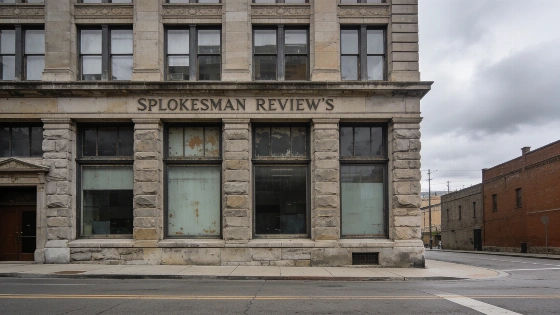
On a summer afternoon, the Spokesman Review’s union handed publisher William “Stacey” Cowles a vote of no confidence in executive editor Rob Curley. The paper’s move to nonprofit ownership was already falling apart. The newsroom’s rebellion started with claims of editorial meddling, shaky management, and misleading talk about donor-funded journalism. Cowles suspended Curley and opened an internal probe. The timing was tight. The handoff to the Comma Community Journalism Lab was just weeks away.
Comma's goal was to raise $2 million to support the nonprofit transition, but delays in reaching this fundraising target repeatedly postponed the handover of the Spokesman Review.
Curley’s style split the newsroom for years. Staff accused him of killing or watering down stories that might upset local power players or donors. Some said he punished those he saw as disloyal. His financial choices raised eyebrows. He hired his own son at a salary above most reporters. He brought in out-of-town editors before Comma hit its fundraising mark. There were also reports of inappropriate comments and behavior by Curley and a Comma editor. Some incidents involved teenage interns.
Broken promises
Trust in the nonprofit plan collapsed fast. Management admitted that, despite public claims, not a single reporting job at the Spokesman Review was funded by community donors. Reporters had pitched “community-funded” journalism to readers and donors. They found out they’d been misled. One staffer said they felt they had lied for Curley without knowing it. This truth only came out after Curley’s suspension. Staff were stunned. Anger followed.
After Curley was suspended on August 7, 2026, the Spokane Editorial Society held a no-confidence vote in response to staff complaints. However, this vote was not an independent decision to terminate Curley’s employment, but rather a reaction to the ongoing internal investigation.
Editorial independence under fire
Curley’s record at the Spokesman Review echoed his past. At the Orange County Register, he faced criticism for favoring powerful groups and changing published stories for politicians without public notice. At the Las Vegas Sun, staff clarified Curley had no part in the Pulitzer-winning series often listed in his bio. In Spokane, reporters said he changed stories to fit the interests of local institutions like Gonzaga University and Spokane Public Schools. Editors and reporters sometimes objected. He pushed ahead anyway.
Comma’s arrival blurred the lines. Editors Donna Wares and Ron Sylvester, both longtime Curley allies, started shaping stories before the official transition. Staff saw this as a breach of journalistic ethics. Union contracts said Comma editors had to wait until after the transfer. The union filed a grievance. The interference didn’t stop. Resentment grew. Confusion over who was in charge deepened.
Flashpoint and fallout
August brought wildfires to Spokane. The newsroom hit a boiling point. Sylvester, whose job was unclear to many, made unauthorized edits to a reporter’s story. He introduced factual mistakes. Courts reporter Alexandra Duggan pushed back. Curley tried to fire her. Managing editor Lindsey Treffry refused. Editors took their complaints to the publisher. Curley was put on leave. He tried to return, using an intern’s keycard. Staff hid until HR escorted him out.
Staff described a pattern: cronyism, retaliation, and inappropriate conduct. Former reporter Rachel Alexander described a wave of women leaving the newsroom. She said Curley often singled out female staff for criticism or exclusion. Interns said they saw sexually explicit images on Curley’s iPad during a home tour. Multiple employees raised concerns about lewd comments from Sylvester in front of interns. Some said Curley promised executive jobs to young women in exchange for loyalty.
After Curley’s suspension, the union’s no-confidence vote was nearly unanimous. The newsroom felt sharper and more united without him. But the publisher has kept the investigation’s results secret. Staff and the community still don’t know what comes next for Curley.
Nonprofit model in question
The Spokesman Review’s failed handoff shows the dangers of nonprofit newsrooms without real transparency or oversight. The Comma plan was sold as a way to save local journalism from corporate cuts. In reality, it set up a leadership structure with too much unchecked power and blurred ethics. The newsroom’s ordeal matches warnings from other media transitions, like those in Longview Tribune reporting about editorial independence after ownership changes.
The investigation drags on. Curley’s future is still up in the air. He could still lead Comma, even if he’s banned from the Spokesman Review. The board says it will follow the investigation’s findings if the process is fair. Staff remain skeptical. At a recent Comma event, Curley returned to the stage. He got applause. His influence isn’t gone.
The Spokesman Review’s crisis is a warning for anyone betting on nonprofit models to save local news. Without clear lines, transparency, and a wall between editorial and fundraising, even the best plans can fall apart. The lesson is blunt. Changing ownership won’t fix a broken newsroom or guarantee editorial freedom. Real change needs leaders who earn trust and protect the people telling the community’s stories.