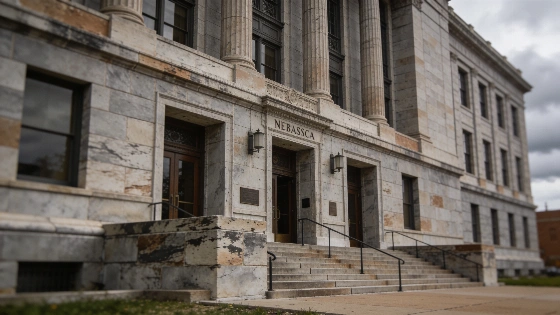
Nebraska is asking the U.S. Court of Appeals for the Eighth Circuit to reverse a federal judge’s order blocking basic provisions of its Parental Rights in Social Media Act, or LB 383. The law would require platforms to verify users’ ages and bar people under 18 from creating accounts without a parent or guardian’s permission.
Nebraska Attorney General Michael Hilgers is defending the law in the appeal. The state argues that LB 383 regulates the agreements users enter into when opening platform accounts, rather than restricting speech itself. In its appellate filings, Nebraska contends, “The First Amendment does not protect speech with minors to which their parents do not consent.” Hilgers also argued that age verification would stop minors from falsely claiming parental authorization. He wrote: “Neither does it give adults a right to avoid age verification to ensure minors with non-consenting parents cannot simply lie to circumvent their parents’ wishes.”
U.S. District Judge John Gerrard blocked the age-verification and parental-consent provisions, finding that they had “a direct impact on several protected First Amendment activities.” He said the restrictions appeared connected to efforts to limit minors’ access to speech concerning subjects including obscenity, drug use, body dysmorphia and suicide. The law’s separate requirement that platforms provide parents with tools to monitor their children’s social-media use remains in effect. The court considered that provision more narrowly aimed at harms associated with unmonitored use.
The lawsuit, NetChoice v. Hilgers, was brought by NetChoice on behalf of major platforms, including Meta, TikTok, Snap and Google’s YouTube. NetChoice argues that Nebraska’s restrictions conflict with the Supreme Court’s 2011 ruling in Brown v. Entertainment Merchants Association, which struck down California’s restrictions on minors’ access to violent video games. The court held that government cannot broadly restrict young people’s access to ideas based on the content or medium of expression. The Supreme Court’s 2011 opinion is basic to the dispute: Nebraska frames LB 383 as a measure governing account formation and parental authority, while NetChoice says it restricts access to protected expression.
Missouri has also joined a Florida-led multistate friend-of-the-court brief filed in the Eighth Circuit in support of Nebraska. Missouri Attorney General Catherine Hanaway said the provisions “regulate the agreements people enter into when opening accounts with platforms, not speech.” The states also invoke their authority to protect children’s welfare and back parents’ role in directing their upbringing.
The Eighth Circuit’s decision will determine whether the blocked age-verification and parental-consent requirements can take effect while the constitutional challenge proceeds. Until the district court’s order changes, those provisions remain blocked, while the parental-monitoring requirement remains in force.