
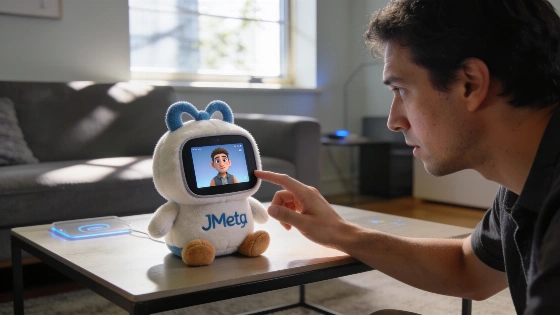
Jolly, the plush mascot for Meta’s Muse AI, has become a lightning rod. The agent is for adults only. But its branding? Pure toy store. Jolly pops up everywhere-dressed in togas, gym clothes, and soon, as a Tamagotchi-style gadget. The look is unmistakable. It’s a child’s toy, not a grown-up’s app.
Meta requires all Muse users to be at least 18 years old, enforcing age checks and blocking accounts it detects as underage.
Meta’s top brass say the design is harmless. Mona Sarantakos, vice president at Meta Superintelligence Labs, calls Jolly “delightful.” She says it helps people talk to AI without feeling awkward. Meta spokesperson Daniel Roberts says the company blocks under-18s, checks birth dates, and runs extra checks to keep Muse adults-only as detailed in headtopics coverage. But Alexandr Wang, Meta’s chief AI officer, has only fueled the meme. He posts Jolly in playful and sometimes suggestive scenes. The internet noticed.
But the worry goes beyond kids. Jolly’s soft look could make adults forget about privacy. Meta uses Muse interactions to train its AI unless users opt out. That’s easy to miss when the interface is a plush cartoon. Jathan Sadowski, a professor at Monash University, warns that “design features like being cute and frictionless, or tapping into nostalgia for devices that didn’t constantly surveil and intervene in our lives, are sly ways to make people drop their guard, stop asking critical questions, and slip into being passive users.”
In late September 2026, Meta introduced a separate opt-out for visual data collected from its smart glasses, ensuring that if users disable this option, their visual data will not be used for AI training or reviewed by contractors. However, this opt-out applies only to visual data, not to all audio sessions.
Meta is not alone in using mascots. Microsoft had Clippy. OpenClaw has a lobster. Cute characters have long softened digital assistants. Some experts say Muse’s branding borrows from Japan, where adorable mascots sell tech to everyone. The aim may be broad appeal, not just kids. But timing matters. Meta just settled social media addiction claims, agreeing to pay up to $16.7 billion and add new teen restrictions on Instagram and Facebook. The pressure is on.
This winter, Meta will launch Muse Charm. It’s a Tamagotchi-like device that brings Jolly into the real world. Youth advocates are watching. Golin calls it “a completely inappropriate attempt by Meta to get young kids hooked on Muse.” He wants families and regulators to pay close attention.
Meta says a “confidential” version of its Muse virtual machine is coming in 2026. It could use cryptography to block Meta from accessing user data. But even with that promise, adults face tough choices. Ryan Calo, a professor at the University of Washington, compares using AI agents to hiring a tour guide. You trust them to show you around, but you rarely know whose interests they serve. Creators and publishers are watching too. Google’s shift from Assistant to Gemini, as reported earlier, shows how fast digital assistants can change.
Meta’s bet is bold. By wrapping AI in plush, customizable charm, it wants to win over users who fear surveillance. But there’s a risk. When an adult product looks like a child’s toy, people may stop asking hard questions. That’s dangerous. For anyone building or using AI, the warning is clear. Cute doesn’t mean safe. Not when the company behind it has a long record of using user data for profit.
Meta is based in Menlo Park, California. As of 2026, it runs Facebook, Instagram, and WhatsApp, reaching billions worldwide. Muse and other AI projects are part of Meta’s push to put generative tech everywhere. The company’s recent legal settlements over social media addiction have led to payouts up to $16.7 billion and new teen restrictions. The stakes are high as Meta rolls out new AI products.








