
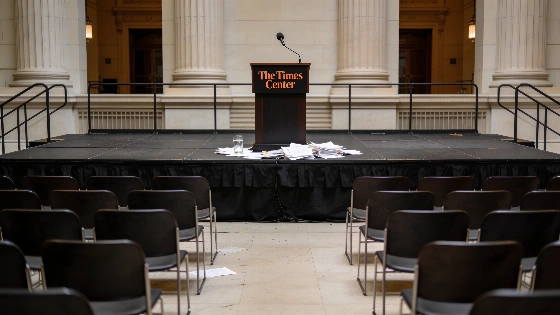
Meredith Kopit Levien and Nicholas Thompson took the stage at The Times Center for the inaugural Status Summit on September 9, 2026. The event brought top media managers and editors to New York for candid discussions about the state of the media market, including how legacy media brands are adapting to a digital-first world.
For publishers and content strategists in the room, the message was clear. The New York Times chief executive and The Atlantic’s top executive fielded pointed questions about business pivots and revenue models, as well as the challenge of keeping audiences engaged. Oliver, who moderated, kept the conversation focused and unsentimental. Attendees had to consider what works in 2026, and what is already outdated.
The summit stood out from the usual conference circuit. Speakers spoke frankly about the pressures facing even the most established brands, rather than sticking to scripted panels. Kopit Levien made headlines when she said no publisher is immune to changing reader habits and new ways of making money. Thompson echoed the urgency, saying adaptation is now a matter of survival for publishers hoping to stay relevant. The Wrap reported that Kopit Levien said AI companies must enter commercial agreements if their models use New York Times journalism to train generative tools. She also stressed the company’s readiness to defend its rights.
Many attendees, veterans of countless industry events, noticed the difference. The agenda focused on real engagement, not recycled talking points. The first session quickly became the day’s reference point, as executives and strategists picked apart the comments for clues about where the industry is headed.
Debates centered on paid subscriptions and audience segmentation, while speakers also weighed the value of sharp analysis. The Wall Street Journal’s recent praise of Status as a “must-read” was cited as proof that original reporting and distinctive content remain among the best ways to stand out in a crowded market. The summit’s unscripted format left little room for empty optimism.
For those watching the intersection of editorial decisions and platform strategy, the opening session offered a rare look at how top media leaders are thinking. The conversation tackled paywall fatigue and the limits of scale, while speakers also discussed the need to keep experimenting. As covered in our earlier report, similar themes have surfaced at other industry gatherings, but few have matched the directness seen in New York.
Speakers suggested the old playbook is done. The future belongs to publishers willing to make hard decisions and invest in original reporting, while leaving outdated assumptions about audiences behind. The first session offered no easy solutions, but the discussion pointed to a widening gap between winners and losers in digital publishing. There is less room for those waiting on the sidelines.
Information from an Investing.com transcript, The New York Times described itself as a digital-native media group at the Citi Global TMT Conference on September 9, 2026. The company acknowledged short-term cost pressures and said video monetization is still in its early days. It also confirmed that its digital transition is now considered complete, with the focus shifting to deeper engagement and stronger pricing, alongside new formats.








