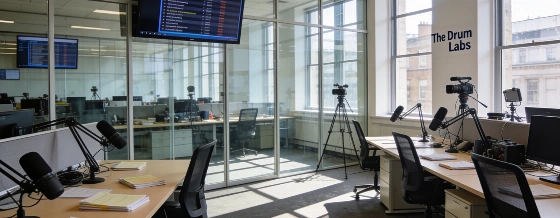
Major brands and agency leaders face off in London as The Drum Live 2026 opens its newsroom to the public. Attendees shape the editorial agenda and challenge industry orthodoxy.
This September, The Drum will open its newsroom to the public, but the real contest isn't for stage time-it's for control over the marketing story itself. For two days, executives from Unilever, Salesforce, Channel 4, Diageo, Mars, Berghaus, and others will have to defend their strategies in front of an audience that isn't just listening. Attendees will interrogate, vote, and help decide which stories define the industry's next chapter.
In 2025, UK advertising spend is projected to surpass £40 billion, reflecting the sector's resilience and ongoing transformation amid digital disruption.
One of the main topics is the crisis of confidence in the CMO. The headline sessions go straight to the point: Why are boardrooms losing faith in marketing leaders? What needs to change for CMOs to regain authority? Without trust, marketing budgets and influence will keep shrinking. The Drum's editors have set up an Oxford-style debate on whether consumers still care about brands' social purpose, while Channel 4's Katie Jackson will break down how to create real buzz around programming in a crowded media landscape.
AI is a central issue, not just a talking point. Monks' Wesley ter Haar and Salesforce's Jo Pettifer will be pressed on whether AI should be left to market forces or regulated. A live gameshow will challenge contestants to build the "ultimate marketer of 2030," revealing which skills and qualities the industry actually values under pressure. Unilever's Rani Al Hajji will explain the mechanics behind a World Cup campaign that spanned 35 brands, 120+ markets, and 50,000 creators, offering a look at how a global FMCG company tries to turn cultural moments into measurable growth.
According to a 2024 Reuters Institute Digital News Report, 56% of UK news consumers now access news via digital platforms, with social media and mobile apps driving the shift away from traditional TV and print. This trend is reshaping how brands and publishers engage audiences and measure impact.
Creator marketing will also be examined. Kantar and Google will ask whether likes, views, and follower counts provide real insight or just vanity numbers. As the event wraps up, VML Live's Charlie Wade will revisit the World Cup to see which brands actually broke through and which tactics are worth repeating at the next global sporting event.
Throughout both days, the newsroom will be busy with live podcasts, quick talks, and audience votes. The format is designed to keep attendees engaged-they're expected to challenge speakers, shape the editorial output, and leave with more than just talking points. This is a newsroom in action, not a lecture hall.
For those watching the intersection of AI and newsroom economics, the format echoes recent reporting on AI's potential to reshape revenue models and editorial workflows. The Drum Live 2026 is less a showcase and more a stress test for the industry's willingness to adapt, experiment, and let the audience drive the agenda.
The result won't be a tidy consensus but a sharper, more contested vision of marketing's future. The Drum is betting that transparency, confrontation, and audience participation will force the industry to face its blind spots-especially around AI, trust, and the real value of social purpose. Those relying on old playbooks or reputation alone will be outpaced by a crowd that wants proof, not platitudes. In 2026, the marketers and publishers who thrive will be those willing to have their strategies tested in public, challenged in real time, and rebuilt in the open.
The Drum, founded in 1985, has become one of the UK's most influential marketing and media platforms, reaching over 1.2 million professionals each month. Its events and editorial work are known for combining industry access with public scrutiny, making it a key player in shaping marketing conversations across Europe and beyond.