
Advertisers are shifting budgets as new data reveals which programmatic DOOH formats and venues drive the strongest results. Here’s how to maximize reach and ROI in a crowded omnichannel market.
Advertisers are rethinking their programmatic digital out-of-home (pDOOH) strategies as new data highlights which formats, venues, and deal types actually deliver results. With more than 2.1 million programmatically-enabled screens now tracked worldwide, the latest Programmatic DOOH Trends Report from Broadsign and PlaceExchange breaks down where budgets are going and what that means for anyone working in media, monetization, or audience growth. The Drum reports that this data comes from real transactional activity across a broad inventory, not just projections.
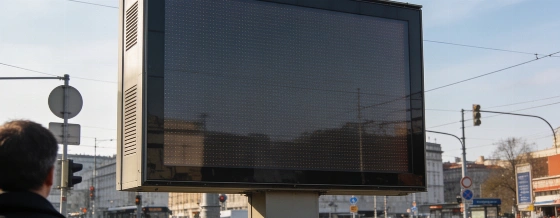
City center and roadside billboards still make up the largest share of pDOOH spend at 48%, with transit placements adding another 12.7%. But the report points to a clear move into more context-driven environments: retail venues now account for 18.5% of tracked investment, and advertisers are putting more money into grocery stores, gyms, bars, restaurants, and even gas station pumps. This shift gives buyers more ways to match campaigns to audience mindsets and physical settings, instead of relying only on traditional high-visibility spots. According to The Drum, this trend reflects a wider industry move toward placements that are both more relevant and easier to measure.
After the Broadsign and Place Exchange merger in November 2025, the combined programmatic DOOH network grew to 1.8 million screens, marking a turning point where programmatic buying became a mainstream, not niche, practice.
For publishers and media operators, the takeaway is straightforward: to maximize pDOOH revenue, offer a mix of broad-reach traditional inventory and targeted, context-driven screens. The most effective campaigns use both, relying on data to allocate spend across different venue types. This approach is similar to what works in other sectors, where context and creative adaptation drive engagement-like the focus on editorial depth and interactivity in live blog formats, as covered in recent reporting on live blog audience strategies.
Creative specs and format choices
The report finds that most pDOOH spend is concentrated around a few creative specs. For video, 77% of spend goes to just two formats: 1080x1920 (vertical portrait) and 1920x1080 (landscape). Display ads are similarly focused, with 79% of spend split between 1080x1920, 1920x1080, and 1400x400. This standardization lets advertisers reuse creative assets efficiently and put more resources into dynamic creative optimization (DCO) and context-driven messaging.
Industry sources report that in December 2025, Google Display & Video 360 launched Programmatic Guaranteed for DOOH, signaling the integration of pDOOH into major adtech platforms and aligning it with standard digital buying practices. This development is part of a wider trend, as OAAA data shows U.S. OOH ad revenue surged 10.7% to $3.16 billion in Q2 2026, the first time quarterly revenue surpassed $3 billion, providing a strong macroeconomic backdrop for digital and programmatic growth.
Dynamic creative optimization is making a difference, with context-driven messaging increasing campaign effectiveness by 17% and boosting returns up to 2.5 times. For publishers, supporting these main specs and enabling DCO workflows is now essential for attracting premium programmatic demand.
Deal types and transaction models
Buyers now have several transaction options, each with its own strengths. Private marketplace (PMP) deals make up over 86% of all pDOOH spend, giving curated access to premium inventory and the ability to tailor deals to specific audiences or always-on packages. Open exchange real-time bidding (oRTB) is still the fastest way to scale and stay flexible, while programmatic guaranteed (PG) offers certainty for campaigns that need fixed delivery or premium placements. Industry analysis suggests that the adoption of these models shows how programmatic DOOH buying has matured by 2026.
Choosing the right deal type depends on campaign goals. Campaigns that need speed and reach may use oRTB, while those requiring specific placements or delivery guarantees will benefit from PG. The main point is to match transaction models to campaign objectives from the start, reducing friction and improving ROI.
Strategic takeaways for publishers and buyers
As pDOOH shifts from a niche channel to a core part of omnichannel campaigns, advertisers and publishers are rethinking how they plan, create, and monetize. Data-driven inventory allocation, format standardization, and flexible deal structures are now necessary to stay competitive. Publishers who diversify their inventory and make creative adaptation easier will win a larger share of growing programmatic budgets.
The current data points to a clear change: success in pDOOH now depends on operational agility and a willingness to try new placements. As advertisers look for more relevant, high-performing campaigns, those who invest in strong data infrastructure and creative flexibility will move ahead. Treating DOOH as a static, one-size-fits-all channel is no longer enough-data-backed planning is now the standard for success in this space.