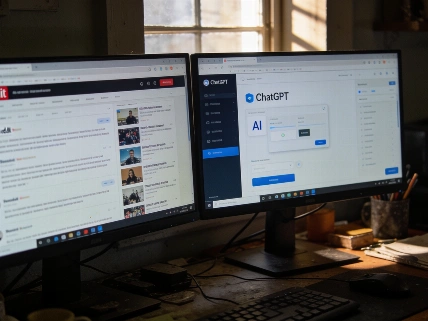

AI-driven language systems are changing how professionals connect online. New tools personalize outreach, filter messages, and bridge language gaps. These advances bring both new opportunities and fresh challenges for authentic networking.
Artificial intelligence is rapidly changing the landscape of professional networking, as advanced natural language processing (NLP) tools reshape how people communicate and build relationships online. AI-powered systems now interpret and generate human language with increasing accuracy, making digital interactions more relevant and tailored to individual users.
Modern networking platforms rely on a growing suite of AI-driven features that streamline introductions and help users manage connections in crowded digital spaces. Services like LinkedIn lead generation are evolving, with NLP models now able to detect user intent and improve the quality of initial outreach. By automating repetitive messaging while keeping human goals at the center, these technologies are shifting strategies and expectations for building professional networks.
Key NLP capabilities are making online networking more efficient and engaging. AI systems can now detect the intent behind messages, allowing automation tools to filter out unwanted contact and highlight relevant opportunities. These models pick up on language cues that signal professional interest, urgency, or polite disengagement, reducing spam and improving conversation quality.
Another major advance is the ability to adapt tone and style, enabling digital correspondence to match different industries, cultures, or organizational levels. Summarization tools help condense long profiles or chat histories, making it easier for users to assess potential connections or recall past conversations. Multilingual NLP support also helps professionals connect across language barriers while preserving subtle meaning.
Earlier networking platforms often relied on simple keyword matching to connect users. Today, semantic matching and language embeddings allow platforms to assess the intent and context behind interactions. This shift enables more targeted connection recommendations and reduces ineffective mass outreach by focusing on shared experiences, goals, or challenges.
NLP tools can analyze conversations for overlapping interests and relevant backgrounds, moving beyond just job titles or skills. Connections are now suggested based on mutual projects or similar objectives, helping users avoid irrelevant messages and fostering more meaningful engagement.
As NLP advances, personalization in networking grows. Context-aware messages tailored to conversation history can boost relevance and user satisfaction. However, when AI-generated messages mimic personal details too closely or introduce inaccuracies, they risk undermining trust. Hallucinations-convincing but false information generated by AI-pose a particular challenge in professional settings where accuracy is critical.
Language bias in NLP models can also introduce stereotypes or inappropriate tones, especially when suggesting connections or drafting outreach. This has led to increased focus on transparency and verifiable claims, with users encouraged to watch for inconsistencies in AI-generated content.
The evolution of digital networking is closely tied to privacy standards, consent regulations, and data policy. Managing data for NLP applications requires strong governance to meet user expectations and comply with laws. New tools are being developed to balance enhanced networking features with privacy and informed consent.
Looking ahead, professionals are monitoring innovations like smaller, specialized language models that can run on personal devices or offer stronger privacy protections. Features such as privacy-preserving inference, improved fact-checking, and better evaluation metrics are being integrated to align NLP with the needs of professional networking. As these capabilities expand, the focus remains on building genuine relationships while maintaining transparency and trust.