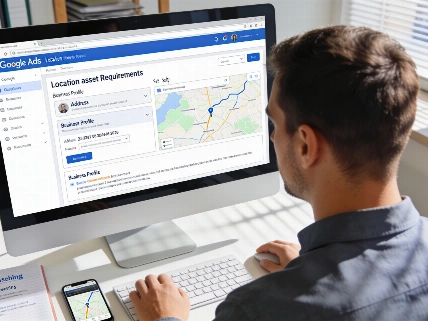

Advertisers can now set precise lookback periods for both click-through and engaged-view conversions. The update removes preset limits, offering more control over how campaigns are measured. Customization is available in both Google Analytics and Google Ads.
Advertisers using Google Analytics now have expanded control over how conversions are attributed, thanks to a new feature that allows custom lookback windows for both click-through and engaged-view conversions. This update eliminates previous preset restrictions, letting users tailor attribution periods to better match their unique sales cycles and campaign strategies.
With the change, engaged-view conversions (EVC) can now be set to any value between 1 and 30 days, replacing the former fixed 3-day window. For click-through conversions (CTC), advertisers can choose any integer from 1 to 90 days, moving beyond the old set of 1, 7, 14, 30, 60, or 90 days. These adjustments are accessible in Google Analytics under Advertising > Conversion management > Settings, as well as within the linked Google Ads conversion management interface.
The ability to define custom attribution windows is significant for marketers aiming to align measurement with actual customer journeys. By moving away from rigid presets, Google Analytics enables more accurate performance tracking, especially for businesses with longer or shorter buying cycles. This flexibility can help advertisers better understand which campaigns are truly driving results and optimize their strategies accordingly.
Industry observers note that this shift follows a broader trend of platforms giving advertisers more granular control over campaign measurement. For example, recent changes in how travel advertisers manage campaigns in Google Search were highlighted in a related update, which can be explored in detail through this report on Google's 2026 travel ad migration deadline.
Google’s latest move is expected to be particularly valuable for advertisers operating in sectors with complex or extended sales processes, where the standard attribution windows often failed to capture the full impact of marketing efforts. The update is now live for all users of Google Analytics and Google Ads.
Launched in 2005, Google Analytics has become one of the most widely used web analytics platforms globally, with millions of active users across businesses of all sizes. The platform continues to evolve, introducing features that respond to advertiser feedback and changing digital marketing needs. According to recent industry data, Google Analytics maintains a dominant market share in web analytics, serving over 28 million websites worldwide as of 2026.