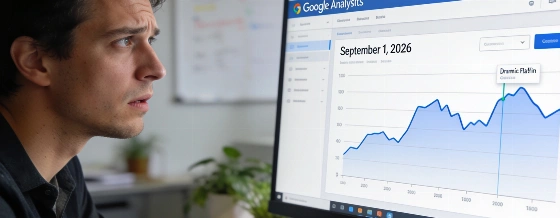
Traffic numbers for September 1 disappeared from Google Analytics dashboards, leaving publishers and marketers scrambling. The missing data appears to be a widespread technical issue, not a real drop in site visits. Google has not yet commented on the outage.
On September 2, digital publishers and site owners found their Google Analytics dashboards showing zero traffic for September 1, 2026. For anyone who depends on these numbers to track audience, plan content, or report to advertisers, the sudden data blackout caused immediate confusion and, in some cases, panic.
On September 1, 2026, major industry publications reported a mass outage in Google Analytics, with many GA4 accounts showing zero traffic for the day, yet Google did not confirm or update its Analytics status page.
Despite the scale of the problem, Google has not released a statement or updated its official status page. This silence has led to speculation, but the evidence points to a technical failure on Google’s side, not a sudden collapse in web traffic. According to Search Engine Land, Dana DiTomaso, a well-known Google Analytics expert, wrote on LinkedIn: “It looks like Google Analytics is having an issue with processing yesterday’s (August 31st) data. I’m seeing this pattern across multiple client accounts, so if you see this don’t panic (I panicked) and hopefully it is resolved soon!”
For publishers, the missing data has immediate effects. Ad revenue forecasts, editorial planning, and campaign reports all rely on accurate analytics. Even a single day of missing numbers can throw off monthly summaries, trigger false alarms in automated dashboards, and make it harder to trust performance metrics. The timing-right at the start of a new month-adds to the confusion for teams closing out August and starting September projects.
On the same day as the Google Analytics data issue, there was a separate outage in Google Cloud's BigQuery service in the us-central1-b region, lasting over four hours and affecting Data & Analytics products. However, industry sources clarify that this was a distinct incident and not the cause of the GA4 traffic reporting problem.
Most analytics professionals agree: this is a Google bug, not a sign that sites lost all their visitors on September 1. The real question is how quickly Google can restore the missing data and communicate with users. Until then, publishers have to adjust their reports and wait for updates. The lack of information from Google highlights how risky it can be to rely on a single vendor for critical audience measurement.
According to a Search Engine Roundtable recap, data gaps like this are usually fixed after the technical problem is resolved, with missing data often filled in automatically. This matches what many in the industry are seeing: the September 1 traffic gap is almost certainly a processing delay or technical glitch, not a real loss of visitors.
Google Analytics is still the main tool for web analytics, with GA4 used by millions of sites worldwide. Industry estimates say more than 85% of the world’s top 10,000 websites use some version of Google Analytics. Because of this reach, even one day of missing data can disrupt reporting for publishers, marketers, and agencies of all sizes. As the digital economy becomes more dependent on real-time metrics, the need for reliable and transparent analytics is only growing.