
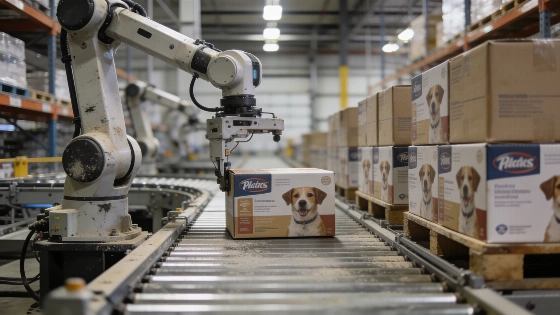
Chewy is turning to artificial intelligence to cut costs and stay ahead in a crowded market, aiming for fifty million dollars in annual savings by its 2027 fiscal year. The company’s push into automation comes as more retailers look to AI for efficiency and customer retention, even as lawmakers in Washington debate new rules for the technology.
While some in the AI industry, like Anthropic CEO Dario Amodei, have urged caution, Chewy is moving quickly. Company leaders say AI is now central to how they manage costs and plan for growth. CEO Sumit Singh told investors that automation and AI-driven productivity are key to lowering Chewy’s variable costs, which frees up money to reinvest in the business. On a recent earnings call, Chewy’s management said they expect "low tens of millions" in cost savings from AI in fiscal 2026, rising to about $50 million a year in 2027, as reported by several financial outlets and confirmed by Reuters.
Chewy reported net income of $80.5 million and an adjusted EBITDA margin of 6.8% in Q2 FY2026, reflecting improved profitability alongside its AI investments.
Chewy’s rollout has been deliberate. Instead of rushing out new customer-facing AI features, the company spent several quarters building a unified data platform and central AI tools. This groundwork helped Chewy avoid the data bottlenecks that often slow down retail AI projects. Now, AI-powered tools are running in customer care, pharmacy, and veterinary services, cutting down on manual work and boosting productivity. Chewy has tied these AI deployments to real productivity gains, not just pilot projects, according to company statements in investor materials.
In advertising, Chewy uses AI to improve its own marketing and to offer predictive tools to brands through its retail media network. These efforts are meant to find new customers more efficiently and get more value from each ad dollar. In its latest earnings call, Chewy reported net sales of $3.33 billion, up 7.3%, and 21.7 million active customers-a 3.8% increase from the previous year, including 43,000 new customers from its SmartEquine acquisition. As detailed in a Chewy Q2 2026 financial results summary, these gains reflect both organic growth and recent acquisitions.
Chewy’s AI assistant, Cai, is already handling nearly a third of orders, returns, and account questions through chat, even though it’s available to less than 15% of site visitors and only launched a few weeks ago. The assistant helps with orders, account management, autoship, and subscriptions, and Chewy plans to expand its reach. According to CEO Sumit Singh, Cai processed about 30% of customer chats in its early rollout. Singh said AI is seen as a way to improve margins, not just a one-time cost cut, and that stronger earnings allow Chewy to keep investing in technology and customer experience.
Chewy’s management has stated that cost savings are being achieved through a combination of automation, scale, operating discipline, and increasingly AI-enabled productivity, highlighting that AI is embedded in the company’s broader cost-structure strategy, not just in customer support.
Chewy earnings-call coverage, Financial Outlets
Chewy is also preparing to launch a redesigned Chewy Plus loyalty program, adding health-related benefits and aiming for better product recommendations for each customer. The company’s focus on data-driven personalization and automation is a direct response to the pressures facing digital retailers, especially as debates continue over AI’s role in commerce. U.S. Federal Trade Commission Chair Andrew Ferguson recently warned that large AI companies seeking both regulation and antitrust exemptions could make it harder for smaller competitors to enter the market.
For publishers and digital operators, Chewy’s approach shows how careful data work and targeted AI can deliver measurable financial results. As political ad spending slows and local ad growth stalls-a trend covered in this earlier breakdown-retailers are under pressure to find new efficiencies and revenue streams. Chewy’s decision to invest in data infrastructure before launching flashy AI features stands out in an industry that often rushes to market. Early results suggest that patience and precision can pay off.
Chewy’s AI strategy isn’t risk-free. The company is moving forward while regulations are still in flux, and relying on automation could bring new operational challenges. Still, Chewy’s focus on unified data and step-by-step AI rollouts shows a level of discipline that many digital businesses lack. For competitors, the message is clear: shortcuts in automation are costly, and real gains come from doing the hard work of data integration. For digital publishers and commerce operators, Chewy’s experience suggests that AI, paired with a solid data strategy, can deliver lasting value.
Founded in 2011, Chewy has become one of the largest online pet retailers in the U.S. The company reported net sales of $11.1 billion for its most recent full fiscal year and has grown its customer base through both organic growth and acquisitions. Chewy’s investments in AI and automation come as it faces tougher competition from both traditional retailers and digital-first challengers, making efficiency and customer retention central to its long-term plans.








