
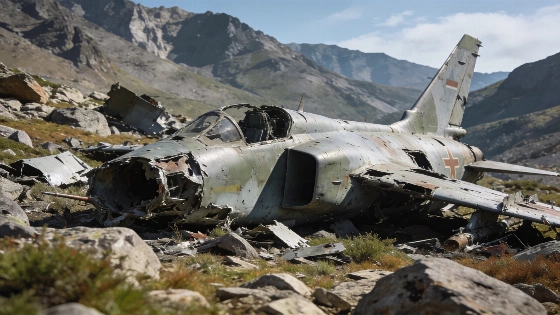
The season 59 premiere of “60 Minutes” featured a U.S. Air Force officer, identified only as Bravo, describing in uniform how he survived after ejecting over Iran’s mountains. Arranged under strict security, the interview gave CBS News an exclusive account of a mission gone wrong and a rescue that nearly failed.
Bravo’s ordeal began when his F-15 was shot down during a mission in Iran in April. He parachuted into hostile territory, but his chute malfunctioned. He later told Norah O'Donnell that experts estimated, based on his injuries and the impact, he hit the ground at 70 to 100 mph. Despite a broken back and other injuries, Bravo climbed a mountain and evaded capture for nearly two days before U.S. rescue teams found him. Multiple independent reports said a man-portable air-defense system brought down the F-15E south of Isfahan on April 2 and 3, 2026, forcing both crew members to eject and separate.
The broadcast also highlighted the Pentagon’s changing approach to media access. CBS News, led by chief Bari Weiss, secured the exclusive interview with Bravo, along with rare on-camera comments from Gen. Dan Caine, chairman of the Joint Chiefs of Staff, and Secretary of Defense Pete Hegseth. That level of access stands out as the Pentagon has grown more restrictive with the press.
People familiar with the deal say Bari Weiss personally negotiated the terms, using CBS News’s reach to get around the usual Department of Defense barriers. The result was a high-profile platform for the Pentagon’s version of events, but it also drew criticism from those who see selective access as a way to control the message instead of promoting transparency.
Reports from The Aviationist say more than 90 U.S. military personnel took part directly in the ground rescue operation, while over 150 aircraft supported the mission’s second phase. The numbers point to the scale and complexity of the extraction effort.
For digital publishers and media strategists, the episode shows how power works between major news outlets and government agencies. CBS News’s pursuit of the scoop, alongside the Pentagon’s willingness to take part on its own terms, points to a shift in how exclusives are arranged and stories presented to the public. Much of the story sits behind a paywall, adding a commercial dimension that blends public interest with subscriber-driven business models.
Access is currency in this media environment, and exclusivity is a bargaining chip. CBS News’s approach shows that even as official access tightens, well-connected outlets can still get through by negotiating the right deal. For publishers and content creators, relationships and strategy matter as much as editorial work. The Pentagon’s cooperation with CBS News looks less like openness than a calculated move to shape the story, and the industry is watching how access is traded.
Bravo reportedly spent about 48 to 50 hours on the ground before being evacuated, a detail confirmed by several outlets, including the BBC. General Dan Caine told CBS that Iranian ground forces were actively searching for the two American crew members, raising the urgency and risk of the rescue.
The CBS exclusive comes as debate grows over Pentagon media policy. A CNN summary cited by Ground News reported internal debate over whether both crew members should appear on television; Pentagon spokesperson Sean Parnell said participation was voluntary. Several independent reports have noted the broader period of tighter information control at the Department of Defense.








