
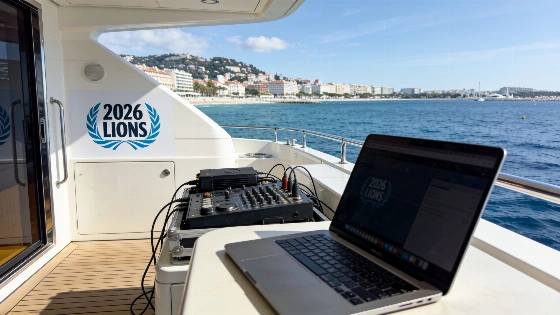
At the 2026 Cannes Lions festival, marketing and media professionals focused on authenticity in an era increasingly shaped by artificial intelligence. Lynne d Johnson, head of programming at AdExchanger, noted that although authenticity is not a new concept, it has gained renewed urgency as AI tools become more central to campaign planning and audience targeting. Independent coverage of the festival described a shift in the debate, from whether AI would enter marketing to how brands can use it while preserving human connection.
Marketers are navigating a field where synthetic audiences and algorithm-driven decisions can influence what real people see. Johnson emphasized that both the data used and how it is applied must remain authentic to maintain trust and effectiveness. At Cannes, Anna Campbell, Global Managing Director at Carat, captured the risk of scaling automated decisions: “An AI system doesn’t choose what it accelerates; it accelerates everything, whether it is a placement or a mistake.” Industry discussions also highlighted privacy compliance and intellectual-property exposure, along with the need to protect proprietary campaign data. The view presented was that AI can handle execution and validation, with data processing among its tasks, while people remain responsible for interpretation and emotional resonance.
Data quality is basic to that balance. Luc Benyon, Marketing Director at Adsquare, said, “We’re integrating AI in our processes and our products. Making sure data is created, tagged and described in an AI-centric way will be a basic skill going forward.” Reliable labeling and provenance matter because opaque or flawed inputs can produce targeting decisions that are efficient but misleading. The same concern applies to media placement: automation can accelerate buying decisions without distinguishing a safe, valuable environment from a low-quality or unsuitable one.
OpenAI’s press briefing at Cannes added to the momentum as the company outlined its expanding ambitions in the ads business. That expansion has since taken a measurable step: on October 21, OpenAI announced that ChatGPT advertising would extend to 26 additional countries, bringing its announced footprint to 89. The rollout began with a U.S. pilot in February 2026 and is aimed at Free and Go users rather than paid-plan users. In its October 21 advertising update, OpenAI said ads are clearly labeled, kept separate from ChatGPT responses and do not influence how the model answers. The geographic expansion includes markets such as Argentina, Peru, Nigeria, South Africa and Ukraine.
Unlike conventional display placements, conversational ads appear in an environment where users can explore products through dialogue, asking questions and refining their choices. That creates a measurement challenge beyond counting exposure: marketers want to understand whether an ad contributed to a decision or purchase along a conversational journey. The practical questions raised at Cannes, including how to measure outcomes and validate campaigns, are becoming more pressing as the channel expands internationally. Marketers also want to know which efforts lead incremental purchases.
The festival’s broader conversation also stressed that AI should support human connection rather than displace it. For brands, authenticity is not only a creative ideal; it depends on trustworthy data and transparent advertising, with people overseeing automated decisions. For a broader look at how publishers at Cannes are confronting AI’s impact on revenue and media buying, see this analysis of shifting strategies and new ad offerings: publishers address AI-driven revenue questions at Cannes.








