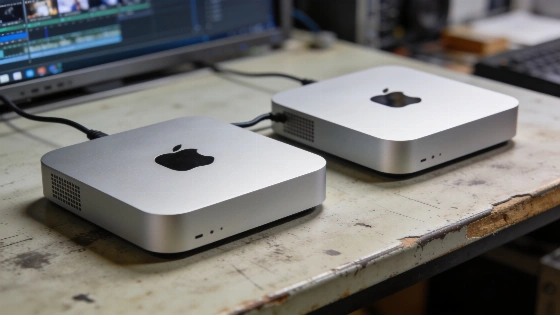
Two Mac Studios, each with up to 512 GB of unified memory, form the basic setup Apple and Meta say can run the model locally. That contrasts with Meta’s Muse agents, which generated 29 million requests in 12 days, almost entirely from cloud infrastructure rather than personal devices, information from DataDome.
The 29 million requests covered September 22 to October 3, 2026. A separate DataDome analysis found that 99.3% came through Cloudflare and Fastly networks. Apple and Meta’s collaboration moves some AI work onto advertisers’ own machines, even though most of the measured agent traffic still ran through the cloud.
Meta introduced Muse Spark Open on October 15, 2026. The multimodal open-weight model has 816 billion parameters, with 42 billion activated for each token, and supports a context window of up to 1 million tokens. Its mixture-of-experts architecture is designed for coding and multi-step reasoning. Meta also built it for agentic workflows, describing it as its most capable US open-weight model to date in its Muse Spark Open announcement.
Apple and Meta adapted the model to run across Mac Studio computers powered by the M5 Ultra chip. Apple’s MLX distributed-inference structure uses RDMA over Thunderbolt to connect the machines and distribute the model’s weights. The setup can scale from two computers to a four-Mac Studio cluster.
Apple said the model’s parameters alone require more than 1.6 TB of memory in native BF16 precision. With 4-bit NVFP4 quantization, that footprint drops to about 493 GB. The weights then fit across two Mac Studios with a combined 1.024 TB of unified memory.
Apple reported generation speeds above 36 tokens per second on a four-Mac Studio cluster. That figure applies to the larger setup, not the basic two-machine configuration.
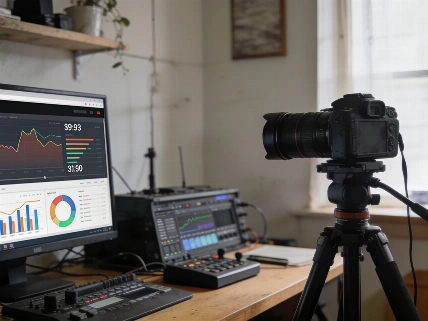
Meta said testing put the model inside DaVinci Resolve, where it reviewed footage frame by frame. It selected standout moments, then created a vertical crop automatically, entirely on-device. The company also described an agent working on Ice Cubes, an open Mastodon client. It changed code to add features, then completed a full build.
For advertisers, the immediate change is confined to how creative gets made.
The partnership is not expected to change ad placement or CPMs immediately. Ad formats are not expected to change either. The technology could eventually affect how ads reach consumers, but the source offers no evidence of a current shift in discovery or media buying.
Meta described the release as available “with limited commercial terms, which allow many developers to use the model for free.” Developers can download and adapt the model’s weights, while its license permits limited commercial use. That may widen access, though local deployment still carries a large hardware requirement: multiple high-end computers.
The announcement also came with a reworked version of Apple’s 1984 Macintosh ad. Alexandr Wang, chief AI officer and founder of Meta Superintelligence Lab, posted the video on X with the line, “Why 2026 won’t be like 1984.” His creative team inserted Meta’s Muse character into the original spot, created by Chiat/Day and inspired by George Orwell’s dystopian novel Nineteen Eighty-Four. Wang framed the revision as a turn toward a different future.
The creative angle raises a broader question for small firms: whether generative tools can put more sophisticated production within reach. A report on agency tools examined that potential. Here, the immediate test is whether local processing proves useful in everyday editing workflows.
DataDome’s figures put local execution in context. Agentic browser traffic rose 4.7 times in September, from 12.5 million to 58.2 million requests. Without Muse, the volume still tripled to 38.7 million. Across DataDome’s network, AI agent requests reached nearly 25 billion in Q3 2026, up from 17.7 billion in Q2. Meta generated 12.4 billion, or about 49.7% of traffic, down from 51.5% in Q2, while its agents grew more than 47%.