Writers using AI assistants show a 32 percent drop in mental effort. MIT research links ChatGPT use to weaker brain connectivity. The findings challenge how publishers and marketers deploy AI in creative workflows.
Writers who turn to AI assistants like ChatGPT may be saving time, but they’re also using less of their own brainpower. A recent MIT Media Lab study, Your Brain on ChatGPT: Accumulation of Cognitive Debt when Using an AI Assistant for Essay Writing Tasks, found that using large language models for writing leads to a 32 percent drop in active mental effort and noticeably weaker brain connectivity. The MIT team cautions that these results, currently in preprint, need careful interpretation, but the shift is clear: creative work is changing, and so is the role of the human mind in the process.
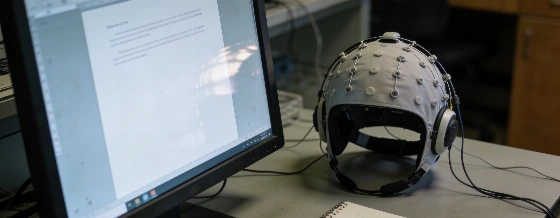
The MIT study involved 54 participants split into three groups: those using ChatGPT, those using a search engine, and those working without external tools, allowing direct comparison of cognitive effects.
As AI systems like Astra take on more of the work, the MIT study’s findings become more urgent. Researchers used EEG to monitor students as they wrote essays, dividing them into three groups: those working unaided, those using a search engine, and those using a large language model. The results were clear. The group working without tools showed the strongest and most widespread neural activity. The search engine group fell in the middle. The LLM group-those using ChatGPT-showed the weakest brain connectivity and the lowest engagement of alpha and beta networks, both important for memory and critical thinking.
The rollout of GPT-6 Astra was staged: Reuters reported that the model was initially available to a limited group of clients, with broader access planned for ChatGPT Plus, Pro, Business, and Enterprise users, as well as via API and AWS in the following days.
The MIT team avoids claims that AI makes people “stupid” or causes “brain rot.” Instead, they document a steady reduction in brain connectivity as external support increases. The more you hand off to AI, the less your brain does. This isn’t just a classroom effect. The study’s authors point to wider implications for advertising, copywriting, and marketing, where the urge to let AI take over is strongest. Campaigns that start with AI risk losing the originality and sharpness that come from human critical thinking.
For publishers and agencies, the impact is immediate. Teams that rely on AI for brainstorming and drafting may see campaign quality and decision-making slip over time. The MIT findings echo concerns raised in MediaPost reporting about the growing share of web content now written or edited by AI, and the challenge of measuring its real value. The evidence now points to a cognitive cost that isn’t easily reversed by switching tools.
OpenAI’s GPT-6 Astra isn’t just another upgrade. It’s the first model the company says has reached “Critical” cybersecurity capabilities and can autonomously interact with standard browsers to complete tasks like a human. According to Reuters, Astra can handle complex workflows such as tax preparation, game development, architectural visualization, legal memo formatting, and housing searches, focusing on agentic computer workflows rather than just chat. It doesn’t have its own browser, instead relying on advanced agentic browser features. This technical leap means Astra can manage complex workflows from start to finish, but it also means the human is increasingly removed from the core creative process.
Content professionals now face a choice. Use AI as a shortcut and risk weakening the skills that drive original work, or treat AI as a tool for refining ideas after the main concepts are set by humans. The MIT study’s data is a warning: the more you let AI do the thinking, the less your brain is wired to do it for you. In a market where memory and differentiation matter, that’s a risk publishers and marketers can’t ignore.
OpenAI, founded in 2015, has quickly become a major force in artificial intelligence research and deployment. The company’s GPT series has seen rapid adoption, with GPT-4 reportedly reaching over 100 million active users within months of launch. OpenAI’s valuation passed $80 billion in early 2026, driven by enterprise licensing and integration deals across publishing, marketing, and software. The release of GPT-6 Astra marks a new phase in the company’s push to deliver artificial general intelligence at scale, putting OpenAI at the center of digital content creation and automation.