
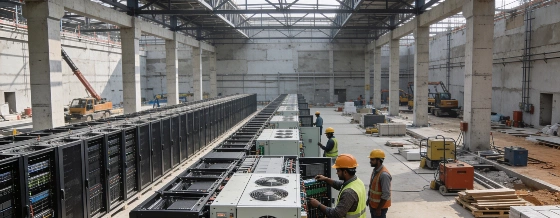
AI’s rapid growth is driving a surge in data center energy and water use. Most companies aren’t tracking this impact. Sustainability frameworks are struggling to keep up.
As artificial intelligence becomes the backbone of modern business, the physical infrastructure powering it is expanding at an unprecedented rate. Data centers-once a niche concern-are now being built around the globe to support AI’s relentless demand for computing power. In 2024, these facilities accounted for roughly 1.5% of global electricity consumption. By 2025, their energy use jumped 17%, outpacing overall global demand. The International Energy Agency projects that by 2030, data centers could require 1.2 trillion liters of water annually just for cooling.
Despite this surge, the environmental footprint of AI remains largely invisible in most corporate sustainability reports. While the GHG Protocol’s Scope 3 technically covers AI as a purchased service, few companies have the data or guidance to report these impacts consistently. The lack of standardized disclosures-Google is among the few to publish per-query environmental data-means that AI’s true cost is often missing from sustainability frameworks. This creates what experts call a “ghost room” in reporting, where a major source of emissions and resource use goes unmeasured.
India’s data center market illustrates the scale of this transformation. The country now has about 1.6 GW of operational capacity, with another 3.1 GW under construction or planned. AI is no longer just a productivity tool; it’s becoming essential infrastructure for sectors like manufacturing, agriculture, and governance. As AI embeds itself deeper into national priorities, the need to account for its environmental impact grows more urgent.
Current sustainability frameworks were designed for a world of physical goods and direct energy use. Scope 1 covers on-site emissions, Scope 2 tracks purchased electricity, and Scope 3 captures value chain impacts. But AI, as a digital input, draws on vast networks of servers, cooling systems, and power grids-resources that are rarely visible to end users. Without clear data and explicit categories, companies struggle to measure or disclose the true environmental cost of their AI adoption.
The GHG Protocol, used by over 92% of Fortune 500 companies, is undergoing its first major revision in 15 years. Yet, as of early 2026, it still does not explicitly address AI as a distinct category. This gap leaves companies procuring AI services without clear guidance on how to report the associated emissions and resource use. As digital infrastructure becomes as central as steel or electricity, sustainability leaders are calling for frameworks that reflect these new dependencies and shared responsibilities.
AI’s integration into core business operations brings real productivity gains and development opportunities. It also plays a role in advancing climate solutions, from optimizing energy grids to improving agricultural efficiency. But as AI shifts from a tool to critical infrastructure, the conversation around its environmental footprint is only just beginning. The challenge now is for sustainability frameworks to evolve in step with digital innovation, ensuring that what gets measured truly reflects the world we’re building.
This growing tension between digital adoption and environmental accountability echoes trends seen in other parts of the AI ecosystem. For example, the way startups are rethinking their approach to AI costs and infrastructure is explored in this recent analysis of cost-saving strategies in AI startups.