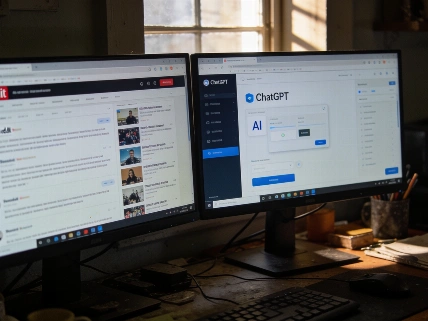

Clients now demand proof of their presence in AI search results, but most agencies lack the tools to deliver clear answers. New data shows AI-driven search is the top client request, outpacing paid ads and video.
During routine client calls, a new question keeps surfacing: do brands actually appear when users ask ChatGPT or other AI tools about their industry? For most agencies, the answer is still elusive.
According to AgencyAnalytics’ 2026 Marketing Agency Benchmarks Report, 66% of surveyed agency professionals say clients now prioritize appearing in AI-driven search results above all other services, including paid ads and short-form video. This shift has happened rapidly, with AI search moving from a curiosity to the most requested service in just one year.
Yet, agencies are struggling to keep up with measurement. The same report found that 64% of respondents view Google’s AI Overviews as their top industry concern. Nearly half-48%-admit they cannot reliably track brand discovery through AI tools, and 47% cannot attribute conversions across the complex, multi-session journeys that AI-assisted research creates.
Traditional rank tracking tools were designed for classic search results, not for AI-generated answers. They can’t reveal if a client is mentioned, how they’re described, or which sources influence the AI’s response. As a result, agencies often have to tell clients they simply don’t know how they’re performing in ChatGPT.
However, AI search visibility is no longer a complete black box. Agencies can now track four key metrics: visibility (whether a client appears for relevant prompts), position (how prominently they’re featured), sentiment (the tone of the AI’s description), and citations (which URLs the AI model uses to build its answer). Monitoring these across platforms like ChatGPT and Gemini allows agencies to present concrete data to clients.
Where this tracking happens is just as important as what is measured. AgencyAnalytics has integrated its AI Tracker into the reporting platform already used by over 7,000 agencies, placing AI search visibility alongside existing metrics like traffic, leads, and revenue. Unlike standalone tools, AI Tracker connects AI search performance directly to business outcomes, using a shared credit pool across all clients without per-seat fees.
For agencies, the workflow is evolving. Increasingly, account managers work directly within AI tools like Claude or ChatGPT, reviewing client performance and pulling data from dashboards. AgencyAnalytics’ MCP bridges this gap by connecting live client data to the AI tools agencies already use, allowing performance questions to be answered without leaving the conversation. Permissions remain intact, ensuring only authorized accounts are visible, and AI Tracker data is delivered directly where teams are working.
This integration streamlines the process: agencies can measure how clients appear in AI search and bring that data into the tools where analysis and content creation happen. The result is a more efficient workflow and faster answers for clients.
Importantly, this is not just an SEO issue-it’s a retention challenge. The top question from clients, cited by 55% of agencies, is whether marketing efforts are driving actual revenue. As expectations shift, agencies are being asked to deliver proof of AI visibility and its impact on business outcomes, not just rankings. AgencyAnalytics CEO Joe Kindness notes, “Clients want to know if they show up in ChatGPT, they want answers the moment they ask, and they expect proof tied to revenue.”
Agencies able to connect AI search visibility with revenue data are better positioned to retain clients and demonstrate value. Those who can’t risk being left behind as client expectations evolve. For a broader look at how AI search is changing the landscape, see how Google’s AI Overviews are now surfacing Top Stories for mobile users in the US in this related report.
AgencyAnalytics, founded in 2010, serves over 7,000 agencies and 150,000 clients worldwide. The company’s platform has become a staple for digital marketing reporting, integrating data from SEO, PPC, social, and now AI search visibility. Its recent AI Tracker and MCP features reflect the growing demand for actionable insights as AI-driven search reshapes client expectations and agency workflows.