
UK publishers are taking direct action against AI companies that scrape their content without permission, introducing new 'Search-Only Contracts' (SOC) to demand payment and enable legal claims. Backed by the Movement for an Open Web (MOW), 31 UK websites have updated their terms to prohibit the copying and repurposing of their material by large language models such as ChatGPT and Google Gemini. These contracts specify payment rates-typically £500 per article-for unauthorized scraping, aiming to strengthen the often-ignored robots.txt protocol.
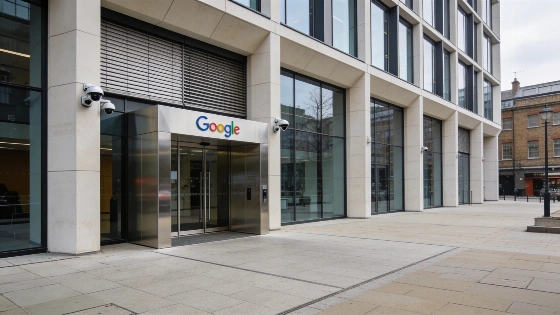
The SOC framework treats every website visit as a contractual agreement, making it clear that users, including AI bots, must not reuse content without explicit consent. MOW states that publishers can now pursue small legal claims with minimal effort, requiring only proof that an LLM has used their work. Once evidence is gathered, publishers can invoice the AI company and, if unpaid, escalate the matter to a local county court using the Moneyclaim.gov.uk platform. If a court judgment is ignored, publishers may send bailiffs to seize company assets at UK offices, with high-profile locations like Google’s new London headquarters cited as potential targets.
Tim Cowan, co-founder of MOW, described the SOC as a practical solution for publishers to assert ownership over their content and seek compensation from AI firms. He emphasized that the SOC bypasses complex copyright and IP law, offering a straightforward invoicing and legal enforcement process. Cowan argued that this approach puts a clear price on content usage by AI, creating a viable marketplace and forcing AI companies to negotiate or face increasing legal pressure. He also pointed to a recent Competition and Markets Authority (CMA) ruling that strengthens the SOC’s position by prohibiting Google from retaliating against publishers who restrict AI access to their content.
Trusted Reviews, operated by Candr Media, has already implemented the SOC but continues to experience heavy scraping-reportedly around 200,000 times per day-from AI bots including those from OpenAI. Chris Dicker, CEO of Candr Media, said the SOC finally gives publishers a legal tool to demand payment, stating that AI companies agree to the terms upon accessing the site and must pay if they use the content in their services.
Industry Support and Implementation
The SOC initiative has received backing from major trade bodies such as the Association of Online Publishers (AOP) and the Professional Publishers Association (PPA). Richard Reeves, AOP managing director, encouraged publishers to adopt tools like the SOC to ensure fair compensation for original journalism. He highlighted the contract’s simplicity, machine readability, and compatibility with existing robots.txt protocols and website terms. Sajeeda Merali, PPA chief executive, called the SOC an interesting approach that gives publishers more control over how their content is used and monetized in the AI ecosystem.
Specialist publisher F-At has also deployed the SOC across its sites, including road.cc, off.road.cc, and ebiketips.co.uk. Tony Farrelly, F-At’s head of content, argued that AI models like Claude, Gemini, and ChatGPT have used specialist content without permission or payment, threatening the livelihoods of independent publishers. He said that collective action is necessary, as neither government nor regulators have effectively held tech companies accountable for unauthorized content use.
How the Search-Only Contract Works
The SOC, created by the Movement for an Open Web, is freely available online. Websites can link to it from their robots.txt file, terms of use, or website footer. The contract is designed to be compatible with existing website usage terms, content licensing agreements, and copyright law. It also aligns with recent CMA requirements, which allow publishers to opt in or out of having their content used in Google’s AI services but do not address compensation. The SOC enables publishers to set their own terms for AI access and ensures that Google cannot penalize them in search rankings for using these controls. The contract and implementation guide are available at m4ow.uk/socw/2.txt.