Workers face rapid change as automation and AI redefine jobs. Sarah O’Connor’s new book puts real people at the center of the robot era. The impact is immediate and personal.
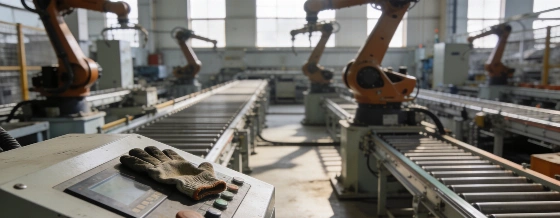
Factory floors that once buzzed with people now run on the quiet precision of machines and the logic of AI. For workers, this isn’t a distant possibility-it’s a daily reality. Jobs are changing, skills are going out of date, and livelihoods are being disrupted by automation.
The share of workers using AI at their jobs in Europe jumped from 26% in 2024 to 52% in 2026, with median users saving about 3 hours per week.
O’Connor’s reporting is grounded in the details: the assembly line worker who now monitors robots instead of assembling parts, the warehouse picker tracked by algorithms, the technician whose skills are suddenly outdated. The Times called her work “original and enlightening, rooted in reality and populated by people”-a rare approach in a field often full of hype. This matches broader research showing that, so far, AI tends to add to existing jobs more than it replaces them, as recent census data and industry analysis confirm (see AllFacts.ai).
While some publishers chase AI-optimized formats to boost clicks and licensing, as reported earlier, O’Connor looks at the cost to people whose stories rarely make the news. She exposes the gap between promised efficiency and the reality of lost jobs, showing that who wins or loses in the robot era depends not just on skill, but on whether institutions value human work. A 2026 study by the Federal Reserve Bank of St. Louis found that while the share of workers using generative AI rose from 28.2% in Q3 2024 to 39.2% in Q2 2026, the percentage of work hours saved increased only slightly, from 1.6% to 2.2% (source).
Recent research from the Stanford Digital Economy Lab warns that employment among 22-25 year olds in the most AI-exposed professions is now about 19% lower than it would have been if previous trends had continued. This early impact on entry-level roles highlights the uneven effects of AI adoption across the workforce, with younger and less experienced workers facing disproportionate challenges.
As publishers, creators, and strategists face the next wave of automation, ignoring the human side isn’t just a moral issue-it’s a strategic mistake. The future of work isn’t far off; it’s happening now. Those who overlook its human cost risk building systems that are efficient but unsustainable. O’Connor’s reporting isn’t just a record of change-it’s a call for anyone shaping the digital economy to put people, not just productivity, at the center of their plans.