A startup says it can get a new open-weight AI model running on AMD hardware within hours, a task that once demanded extensive code changes. That speed could erode one of Nvidia’s most durable advantages: software that keeps developers building for its chips.
Wafer CEO Emilio Andere says the company can make a model run on AMD hardware at least 80 percent as efficiently as on Nvidia hardware within hours of its release. He says AI tools have reduced the amount of code editing and review Wafer’s engineers need to do. Those are company claims, but they point to a practical change: switching chip platforms may take less developer work than it used to.
The CUDA advantage
Nvidia’s Compute Unified Device Architecture, or CUDA, has helped make its chips the default for many AI developers. Nvidia describes CUDA as the software layer that lets applications use its GPUs. Porting software to other hardware used to mean rewriting substantial amounts of code. Newer AI models can now read and rewrite code quickly enough to ease that process. AMD’s competing ROCm platform is not directly interchangeable with CUDA, though AMD’s HIPIFY tool can translate supported CUDA code. Wafer is building a business around doing that for AMD and serving models at lower cost.
The shift matters as AI agents increase demand for inference, the work of running models after training. Patrick Moorhead, chief analyst at MoorInsights, says Nvidia has less of an edge in inference against cloud providers and startups. He also says AI assistants and agents are driving demand for general-purpose central processing units, a market where Nvidia barely competes.
Some rivals take a more specialized approach. Cerebras sells unusually large chips designed for large AI models. AMD bought Taalas, which burns model weights into silicon to make computations more efficient. Those chips require substantial code rewrites to support cutting-edge models, a constraint that makes Wafer’s claimed turnaround especially relevant.
Rivals gain ground
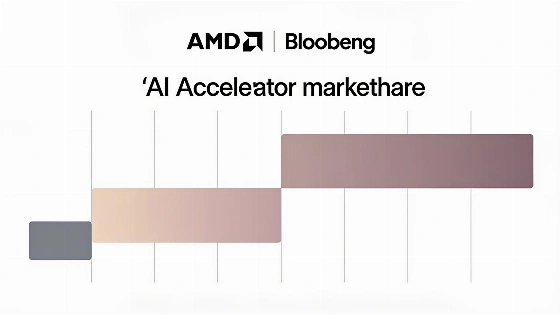
Nvidia holds about 80 percent of AI accelerator sales, according to Silicon Analysis. A separate estimate from Epoch AI put Nvidia at 62.5 percent of AI computing power shipped by major chipmakers between April and June 2026, compared with Google at 25.4 percent, Amazon at 4.6 percent, AMD at 4.1 percent and Huawei at 3.2 percent. Epoch AI cautioned that the comparison carries “significant uncertainty” because it counts different activity across companies, including Nvidia shipments and Amazon deliveries. AMD’s share rose from 2 percent in 2022 to between 7 and 10 percent in 2026. Google is developing its own chips. Amazon and Microsoft are doing the same, seeking lower costs and less dependence on Nvidia. The AI spending report from FAYFO examined the financial pressure of data-center investment, while custom silicon offers cloud companies another way to manage those costs. Epoch AI’s estimates measure computing power shipped or delivered, rather than directly establishing accelerator-sales shares.
The race is unfolding as Jensen Huang departs Nvidia. CFO Colette Kress took the reins, with a permanent replacement still a question in the account. A CEO of a large AI company told WIRED, “Everything sold today was designed two-to-three years ago.” The CEO said Kress or her permanent successor would need to chart the chip industry’s course two years ahead.
Huang cofounded Nvidia in 1993 to make graphics chips for PCs. In the mid-2010s, he backed academic AI research and supplied hardware to labs and startups, while developing software for AI engineering. ChatGPT brought AI to a mainstream audience in 2022, and Nvidia’s revenue rose from $26.91 billion in January 2022 to $215.94 billion in January 2026. Morningstar’s analysis charts Nvidia’s data-center business growing from about $3 billion in fiscal 2020 to $194 billion in fiscal 2026, and estimates that it could reach $385 billion in fiscal 2027. In a separate quarterly report, Nvidia reported $57 billion in total revenue, including $51.2 billion from data centers; total revenue was up 62 percent year over year and data-center revenue 66 percent. Morningstar’s analysis identifies CUDA-related switching costs as part of Nvidia’s pricing power.
China and leadership
Nvidia’s position in China has moved the other way. U.S. restrictions block sales of its most powerful chips there, while Beijing works to build a domestic chip industry. Nvidia can sell previous-generation products, and sales of those chips along with non-AI chips doubled over the past year described in the account. China represented 8 percent of Nvidia’s revenue, down from 20 percent in 2024, according to company filings. The account says it is unclear how many chips shipped to other countries reach China or are accessed remotely by Chinese firms.
Huawei has developed supercomputers that use far more chips than usual to train and run AI models. Z.ai says it trained its models entirely on Huawei chips. If Chinese open-weight models gain traction abroad, the account notes, they could help create demand for Chinese chips in other markets.
Huang’s China dealings also figured in his departure. The account says he had a romantic relationship with Huang Le, also known as Alice Huang, a Chinese executive at Singapore-based Megaspeed. The U.S. government suspects Huang Le is an asset of China’s Ministry of State Security. Megaspeed and its subsidiaries have reportedly imported between $4.6 billion and $7.5 billion in Nvidia chips into Southeast Asia; reports suggest the company may have provided access to Chinese AI firms.
Babak Minovi, a senior analyst at Eurasia Group, said Huang was right that cutting China off could strengthen domestic rivals. Dan Hutchinson, a veteran chip analyst, compared Nvidia’s position to Intel’s 2019 shift from engineering-focused CEO Brian Krzanich to CFO Bob Swan. Krzanich also resigned after a relationship with an employee. Hutchinson says Intel then shifted toward sales as bureaucracy grew and revenue fell, and argues Nvidia could face a similar trajectory.