
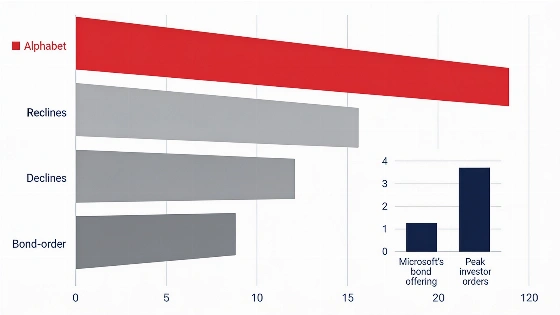
Alphabet shares fell 13% during Thursday's session as investors reassessed the cost of AI infrastructure and the returns tech companies are getting from it. Reuters reported that the decline erased about $500 billion in Alphabet’s market value; its account put the fall at 12.6%. Losses also hit chipmakers and PC companies, as smaller AI cloud firms were caught in the slide. Intel fell sharply after hours, with Reuters reporting a 23% drop. On October 30, Amazon was down 7.2% in premarket trading after the company indicated that capital expenditures would rise again in 2027.
Returns under scrutiny
Data-center spending weighed on Amazon's results and on cash flows at Alphabet and Meta. Amazon burned $42.4 billion over the 12 months ended September 30 and recorded third-quarter capital spending of $77.26 billion. The companies had been viewed as relatively light on debt. Their expanding borrowing to finance AI infrastructure has changed that picture. The selloff put a sharper price on the gap between investment and demonstrated earnings. On October 27, Reuters reported that three major technology companies planned to spend as much as $600 billion during the year while carrying a combined backlog of nearly $1.7 trillion. Reuters’ report also said AWS was expected to post 38.2% revenue growth, up from 36.8% in the previous quarter.
Microsoft offered investors a counterexample. Its earnings beat Wall Street expectations on two counts, and the company showed that AI investments were generating revenue and profit. Alphabet, by contrast, reported slower growth and missed earnings estimates. Reuters described Alphabet’s revenue miss alongside accelerated AI-related cash burn. Separately reported calculations put Alphabet’s quarterly capital spending, excluding finance leases, at 121.4% of operating cash flow, compared with 68% for Microsoft. The source account suggests Gemini may be cannibalizing its parent Google, though it provides no figures isolating that effect.
Microsoft also priced a $25 billion debt sale on Thursday, its first major entry into the US investment-grade bond market since 2017. The offering drew peak orders of $115 billion, more than four times the amount on offer. Its AAA credit rating helped make the sale attractive as Microsoft funds AI infrastructure and data-center expansion. Microsoft said the notes were expected to close on November 4, 2026; the offering included at least $1 billion in floating-rate notes due November 3, 2028. The company said proceeds could go toward working capital and capital expenditures, as well as share repurchases, acquisitions or repayment of existing debt. CNBC reported that Microsoft was targeting $170 billion in capital expenditures for 2026 to meet demand from Anthropic, OpenAI and other customers. Details of the $25 billion notes were announced by the company on October 29.
The infrastructure question sits alongside a separate distribution issue for publishers: a FAYFO report on AI summaries and click rates examined how AI responses relate to clicks on traditional links. Here, investors are focused on whether spending on AI can translate into earnings.
Hardware squeeze
AI investment has also been linked to rising consumer prices for RAM and SSDs, even though those components are incompatible with AI data-center infrastructure. The account connects those higher prices to weaker demand for PCs and smartphones. Intel said its PC business faced a major hit from rising costs tied to chip shortages. Reuters also reported that higher prices were squeezing demand for smartphones and PCs.
Intel described the challenge as “Near-term headwinds across the PC industry.” Retail experts, meanwhile, have blamed chipmakers and memory suppliers for the squeeze. Micron and Samsung are named alongside SK Hynix in a class-action lawsuit alleging that the companies used the AI boom to restrict supply and raise prices.
“The lawsuit talks about these firms using High Bandwidth Memory (HBM) demand like a shield. HBM takes 3 to 4 times more physical wafer capacity than standard DRAM, and the lawsuit alleges these companies intentionally over-allocated production to HBM to starve the consumer market, driving consumer RAM costs up by many times,” said a hardware retail expert handling South Kerala sales, who requested not to be identified. Those claims are allegations in a lawsuit.
Losses spread
The pullback reached PC manufacturers. HP fell 8% and Dell dropped 6.8% after the market, with both companies pointing to lower PC demand. “First, they saw AI is hiking the price of hardware. Now they blame consumers for not buying their overpriced systems,” said Raman G., a 23-year-old graphic design student from Indore.
Smaller AI cloud companies also came under pressure. CoreWeave fell between 5.5% and 6.5% after hours, alongside Amazon's 7% decline; Nebius and Iren also fell within that range. AMD lost an additional 6% in extended trading, while Broadcom fell more than 2.5%.








