
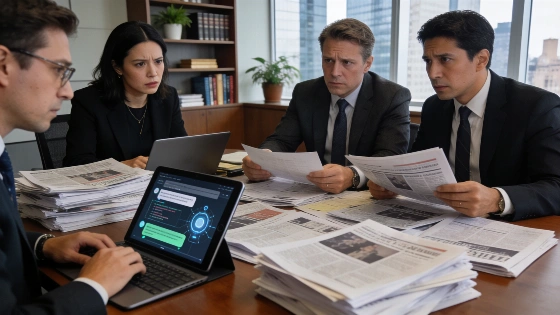
Executives at Microsoft didn’t mince words. They called it “an astonishing theft of unprecedented proportions.” Now, The New York Times Company, Daily News Plaintiffs, Ziff Davis, The Center for Investigative Reporting, and The Intercept are pushing for summary judgment against OpenAI and Microsoft. Their claim: the tech giants copied news content on a scale the industry has never faced. The filings, part of MDL No. 25-md-3143 in the Southern District of New York, show these publishers are leading a larger fight over how AI companies use news for training-without permission.
On September 28, 2026, the publishers formally urged the court to disregard the U.S. Department of Justice's position, emphasizing that the dispute centers on copyright and fair use, not broader AI policy.
The OpenAI-Microsoft partnership, which started in 2019, is now under a microscope. Microsoft invested over $10 billion in OpenAI. That gave it access to OpenAI’s models and let it put them into more than 500 products. The companies swapped huge datasets-Microsoft’s Bing Index and OpenAI’s GPT-3 training data-without getting licenses from the original publishers. Projects like “Project Taxi” and “Project Mango” helped move and scrape billions of web pages, including news from the plaintiffs. A court reporting summary details just how big the data sharing was and how many parties were involved. The numbers are staggering.
The publishers’ evidence shows OpenAI and Microsoft bypassed paywalls, ignored terms of service, and stripped copyright management info from articles. OpenAI staff talked about “hacks” to get at protected content. Microsoft CEO Satya Nadella admitted under oath that AI chatbots now take the place of direct visits to news sites. Data shows Microsoft’s Copilot cut click-through rates to news domains by up to 93% compared to regular Bing search. That’s a huge hit to the traffic and ad revenue that keep journalism alive.
AI outputs and market impact
The lawsuit lays out real examples. AI-generated outputs mirror or summarize the plaintiffs’ articles, sometimes giving users hundreds of words copied straight from the originals. Custom GPTs like “News Summarizer Ace,” “NYTimesGPT,” and “Remove Paywall” were promoted on OpenAI’s platform. These tools were built to pull and repackage news content. Plaintiffs say this isn’t a fluke. It’s the result of deliberate training on their copyrighted work.
As of late September 2026, Judge Sidney Stein had not yet ruled on the summary judgment motions filed by OpenAI and Microsoft on September 4, and certain claims against OpenAI remain pending until a sanctions motion is resolved.
Even OpenAI and Microsoft’s own experts admit news content isn’t technically needed to train large language models. Still, both companies went after news datasets to make their products better at answering current events questions. The plaintiffs say this was a calculated move to grab the economic value of journalism without paying for it. That hurts both the news market and the new market for AI licensing.
Legal stakes and industry consequences
The publishers want more than damages. They’re asking the court to rule that none of the defendants’ uses count as fair use under copyright law. They cite Supreme Court and Second Circuit cases that only allow fair use for transformative purposes, like search or software compatibility-not for commercial products that replace the originals. Here, the plaintiffs say, the AI outputs compete with and replace their work. That damages both current and future licensing markets. A Bloomberg Law case review notes the publishers specifically asked the court to ignore the DOJ’s stance, stressing that the fight is about copyright and fair use, not AI policy.
The complaint also accuses OpenAI of removing copyright management info from articles, which would violate the DMCA. The publishers want statutory damages for every article infringed. They’re pushing the court to throw out all remaining defenses from the tech giants, saying the evidence is clear and overwhelming.
The industry is at a breaking point. AI platforms are pulling news content and making money from it, while the foundations of journalism start to crack. Microsoft’s own internal memos warn of a “doom loop.” If AI models keep cannibalizing the content they need, both news and responsible AI could be in trouble. If the court rules for the publishers, it will send a blunt message. Free riding on journalism is done. The future of quality news-and ethical AI-depends on fair pay and respect for original creators.








