
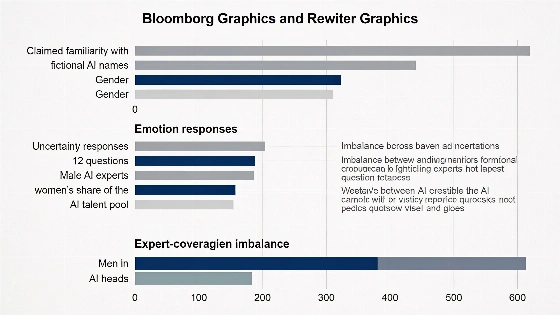
Harvard researchers surveyed more than 5,400 Americans and separately examined more than 75,000 US news stories about AI published from July 2025 through June 2026. Men accounted for 93.6 percent of headline mentions, compared with 6.4 percent for women.
The survey found that 73 percent of male respondents said they knew who OpenAI CEO Sam Altman was. A little over half, 53 percent, said they recognized each of three names tested. One was Mira Murati, OpenAI’s former CTO and the current CEO of Thinking Machine Labs. The other two were Susan Milner and Craig Dalton. Both are fictional.
Women were less likely to claim recognition. Forty percent said they knew Milner and Dalton, while 38 percent recognized Murati.
“Men were more optimistic and more confident” about AI across the board, Laura Manley, executive director of Harvard Kennedy School’s Shorenstein Center, told WIRED. Manley said men tend to be more overconfident in surveys generally. In this survey, the difference also appeared in how respondents handled questions they could not answer.
Men used AI more frequently and, on average, answered more factual questions about it correctly. Yet men and women got questions wrong at roughly the same rate. The difference was uncertainty: out of 12 questions, women said they were unsure an average of 3.3 times, compared with 2.3 times for men. Men answered 7.1 questions correctly on average, against 6.3 for women. In a July 2026 survey of US adults conducted as part of the Civic Health and Institutions Project, 57 percent of women said they never or rarely used AI tools, compared with 43 percent of men.
The coverage figures sharpen that contrast. Over a year of reporting, men appeared in AI headlines more than 14 times as often as women. Researchers found that women made up less than 10 percent of people presented as authoritative AI voices. Since senior AI executives are predominantly men, researchers also looked specifically at people quoted as subject experts. Three-quarters of those experts were men, while women make up roughly 29 percent of the AI talent pool. In 2025, women accounted for 26 percent of new hires in US AI teams. They held 13 percent of C-suite AI roles globally.
“Maybe there should be more women prominently featured as experts or given the platform to express: not sure,” Manley said.
Concern was the leading emotional response among both men and women. Women reported more concern, and also more fear and worry. Men rated positive feelings higher, including curiosity. The survey also found higher ratings from men for enthusiasm and excitement.
Manley said public discussion often projects certainty about either “doom or abundance,” drowning out people who acknowledge what they do not know. “We have to be able to be able to say ‘not sure’ more often,” she said.
On a 10-point scale, women’s average concern rating was 6.4, compared with 5.9 for men. Men rated their curiosity at 5.8, compared with 4.9 for women.








