
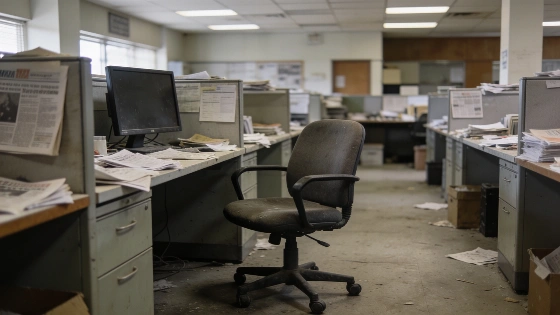
On the same morning The Charlotte Observer published a major investigation into alleged fraud by a local log-cabin company, McClatchy laid off several of its journalists with little warning. Among those let go was Amber Gaudet, the reporter behind the investigation, along with at least seven colleagues. The timing was especially jarring: the layoffs happened just hours before the team was scheduled to be honored at a North Carolina Press Association awards ceremony for their reporting.
According to union and industry estimates, McClatchy's September 2026 layoffs affected more than 90 journalists across at least 13 newspapers in eight states.
Inside the newsroom, the message was clear. Gaudet had called her investigation the kind of reporting that holds power to account. Instead, she and her colleagues were out of work, their contributions acknowledged only in their absence as financial pressures once again outweighed editorial achievement.
This round of layoffs is the latest in a series of deep cuts at McClatchy, part of a broader trend that has steadily thinned local newsrooms across the country. The company’s decision to cut staff immediately after a major journalistic win left those who remained demoralized and raised questions about whether meaningful local reporting can survive under current ownership. According to a Poynter report, McClatchy cited a 41% drop in consumer revenue, even as it maintained previous levels of local news spending, as the main reason for the layoffs.
The layoffs impacted not only The Charlotte Observer but also major McClatchy papers such as The Miami Herald, Sacramento Bee, Idaho Statesman, and Lexington Herald-Leader. In some newsrooms, the proportion of staff cut exceeded 40%.
For publishers and newsroom leaders, the McClatchy layoffs are a blunt warning. When cost-cutting overrides the editorial mission-even at the moment of public recognition-it sends a clear message to staff and readers: financial pressures now set the limits of local journalism, regardless of public service or impact. As legacy chains with little local investment continue to shrink newsrooms, communities are left with less oversight and fewer trusted sources. If this pattern holds, the future of local news may be defined as much by the stories that never get reported as by those that do.








