
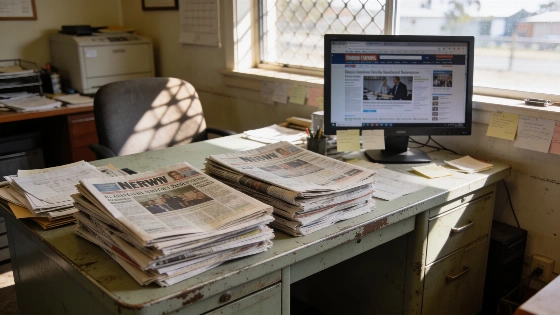
As AI platforms scrape original reporting and serve up condensed answers, local publishers lose both readers and revenue. Paul Thomas, publisher and managing director of Star News Group, isn’t waiting for things to get worse. He’s calling for a new approach to funding and valuing local journalism-one that involves advertisers, tech companies, and the communities themselves.
In September 2026, Anthropic signed its first data center lease in Australia for a campus with a planned capacity of 2.16 GW, with the first phase expected to launch in 2027.
Inside the newsroom, Thomas has adopted AI and automation to make operations more efficient. The company uses these tools for transcription, production, content processing, and admin work. The aim is to free up journalists for original reporting, not to replace them. But outside the newsroom, Thomas is wary of AI platforms that use local journalism without fair payment. If readers get their answers from tech platforms instead of the original source, the financial base for local news gets even shakier.
Thomas draws a clear distinction between the big tech companies. Meta has pulled back from supporting news in Australia, while Google still works with regional publishers and takes part in sustainability efforts. Still, Thomas and other publishers are watching the proposed News Bargaining Incentive, which could require tech companies to pay when they profit from professionally produced news. According to an ACCC explainer, talks on this plan began in April 2026 and it targets parent companies with Australian revenue above A$250 million.
The Australian government is considering copyright and AI training reforms that could allow AI companies to use online content by default, without separate permission from rights holders. This has raised concerns among creators and publishers about the future of content compensation.
Advertising as community investment
Thomas is urging advertisers to rethink how they see local media. He argues that regional titles are often just another line on a media plan, rather than brands with real community roots. He wants corporate advertisers to treat their spending as social impact capital-an investment in the health of the communities where their staff and customers live. State governments in Australia have already set minimum advertising spends in regional newspapers, both to support public information campaigns and to keep local news infrastructure afloat.
Consumer subscriptions still matter, but Thomas points out that hard paywalls can limit reach in smaller markets. In many places, free or hybrid distribution works better for both advertisers and readers. He believes that closer collaboration between commercial and editorial teams-without crossing editorial lines-can open up new branded content and audience insights.
Operational discipline and digital adaptation
Reaching younger readers means investing in mobile formats, newsletters, and social video, all while keeping up journalistic standards. Print is still profitable for Star News Group, but Thomas admits that rising newsprint costs and distribution headaches may speed up its decline faster than falling reader demand alone. He argues that news organizations should be defined by what they do, not the format they use, and that a mix of operational discipline, digital distribution, and new funding models can keep local journalism going.
There are a few takeaways for media leaders: AI can make newsrooms more efficient, but publishers need to guard against their work being used without payment; advertisers and governments can help sustain local news; and nonprofit models may be the answer where commercial logic fails. As seen in a recent case, even large publishers are rethinking their audience and revenue strategies as digital platforms change course.
Thomas’s approach is practical and urgent. He isn’t nostalgic for the past, and he isn’t waiting for tech giants or policymakers to fix things. Instead, he’s building new partnerships and funding models to keep local journalism alive. For publishers and advertisers, the message is straightforward: the future of trusted local news depends on treating it as essential community infrastructure, not just another media buy.








