
Fred Burkhardt, who led IFRA through major media transformation, has died at 97. His vision helped publishers worldwide adapt to digital change. Industry leaders credit him with shaping modern journalism.
Fred Burkhardt’s leadership at IFRA from 1972 to 1994 shaped how publishers, editors, and technology suppliers navigated one of the most significant technological shifts in news media history. His work directly influenced how newspapers worldwide approached innovation, collaboration, and the transition from traditional print to digital workflows-an impact still felt by those managing editorial operations and digital publishing today.
Burkhardt, born in Nuremberg in 1929, experienced the upheaval of wartime Germany before training as a typesetter and later studying in the United States as a Fulbright scholar. He earned a doctorate in economics in Berlin in 1957, focusing on remote and high-speed typesetting, foreshadowing the industry changes he would later help drive. After roles at Linotype and Harris Corporation, he joined IFRA in 1972, just as newspapers relied on hot-metal typesetting and letterpress printing.
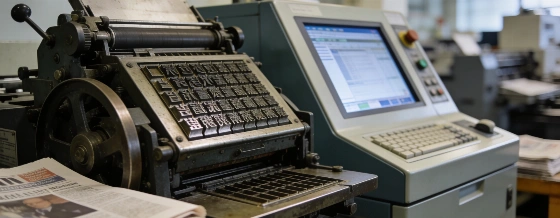
During his two decades at IFRA, Burkhardt oversaw the industry’s transformation through phototypesetting, offset printing, computerized pagination, digital page transmission, and computer-to-plate production. IFRA became a global forum where publishers, engineers, and manufacturers collaborated to develop and adopt these innovations. Thousands of professionals attended IFRA events to exchange knowledge and address shared challenges.
Colleagues described Burkhardt as exceptionally skilled at uniting people with diverse interests. He combined technical expertise with diplomatic ability, fostering an environment where competitors could work together for the benefit of the entire industry. Under his leadership, IFRA expanded beyond research, launching conferences, seminars, publications, consulting, and the annual IFRA Expo-key meeting points for the international newspaper community.
Burkhardt’s vision extended beyond print. While many in the industry viewed electronic media as a passing trend, he recognized that computer networks would fundamentally change how news was created, distributed, and consumed. He led early initiatives into telecommunications, digital publishing, and electronic newspaper services, anticipating the rise of the commercial internet.
In his final years at IFRA, Burkhardt launched the Initiative for Newspaper Electronic Supplements (INES) in 1994, aiming to prepare publishers for the internet era through collective action on digital products and online services. Many of the questions he raised about digital adaptation remain relevant for today’s publishers and content leaders.
Burkhardt often emphasized that newspapers are in the content business, not the newsprint business-a perspective that has only grown in importance as publishers diversify across platforms. His legacy continues in WAN-IFRA’s ongoing commitment to innovation and quality journalism. For those interested in how newsrooms are adapting to digital change, a recent story on Swedish publishers using new metrics to drive engagement offers further insight into the evolving strategies shaping the industry.
Burkhardt is survived by three daughters and their families.