A fleeting label in April 2026 revealed how Google Discover handles brand-new articles with no user history. The process highlights the challenge of surfacing timely news before engagement data exists.
When a news article is first published, it faces a unique challenge in Google Discover: it may be highly relevant and timely, but it arrives with almost no user interaction data. This scenario, known as the cold-start problem, means the system must decide who to show the article to before any meaningful engagement signals are available.
In April 2026, researchers at 1492.vision observed a short-lived label in Discover’s feed: coldstartcard.f. This label appeared only between April 21 and 22, attached to a handful of very fresh articles-primarily covering the 2026 World Cup. The label’s brief presence suggests it was part of a limited experiment or test pipeline.
The cold-start challenge is especially acute in Discover, where content is pushed proactively rather than in response to user queries. If a hot news article is shown to the wrong audience, it can quickly accumulate negative signals. Shown to the right profiles, it can gain traction and reach a wider audience before its news value fades.
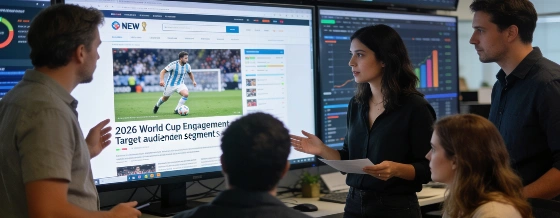
Analysis of the coldstartcard.f label revealed it was attached to content cards for articles such as the 2026 World Cup schedule, FIFA ticketing issues, and box office projections for 'Mortal Kombat II.' Of six impressions tracked, five were sports-related, underscoring how time-sensitive events are prime candidates for cold-start testing. The sample was small-just six impressions for four unique articles-but the pattern was clear.
For readers, these articles were hot topics. For the recommendation model, however, they were cold items: new, with no prior engagement. The system had to rely on metadata-title, source, image, entities, and category-rather than user interactions to decide initial distribution.
Importantly, the feedback mechanisms for these cards were the same as for any Discover content: users could open, like, save, follow entities, mark as not interested, or hide the card. AI-generated summaries sometimes appeared, but these were part of a broader AI Overview layer, not unique to cold-start cards.
The real test for Discover is not just identifying promising content, but selecting the right initial audience. Early signals from specific user profiles-such as event-driven readers or trend-sensitive sports fans-can help the system decide whether to expand or limit distribution. Sports news, with its rapid peaks and segmented audiences, is a natural fit for this approach.
Recent research co-authored by Google Inc., Google DeepMind, and UC Davis describes how large language models (LLMs) can help address the cold-start problem offline. By simulating user preferences based on history, LLMs can generate synthetic signals to better initialize new items before they appear in the feed. However, the observed coldstartcard.f label likely represents an online mechanism: exposing new articles to select profiles, collecting real engagement, and then adjusting reach accordingly.
For publishers, this means that beyond optimizing for titles, images, and structured data, it’s crucial to make the article’s topic and angle immediately clear. The system needs strong editorial signals-entities, categories, time context, and source clarity-to match fresh content with the right test audience. The faster Discover can understand an article’s relevance, the better its chances of reaching interested readers.
It’s important to note that coldstartcard.f does not guarantee exposure for every new article, nor does it prove that LLMs directly control feed recommendations. Instead, it appears to be a trace of a bootstrapping mechanism designed to quickly gather real signals for low-history content. This approach ensures that Discover can surface not only proven popular articles, but also give new stories a fair initial test.
For those tracking Google’s evolving approach to content distribution, these findings echo broader trends in platform enforcement and experimentation. For example, recent changes to Google Business Profile review penalties, as covered in our report on stricter review ban periods, show how Google continues to refine its systems for both user and publisher outcomes.