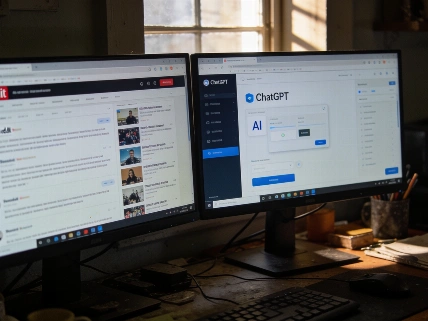

Google Gemini just leapfrogged Perplexity in global AI referral traffic. Publishers are watching as Gemini’s share jumps, reshaping how audiences discover content. ChatGPT still dominates, but the landscape is shifting fast. See what’s driving these changes.
For publishers and content creators, the battle for referral traffic is entering a new phase. Google Gemini has just overtaken Perplexity as the world’s second-largest source of AI chatbot referrals to websites, according to fresh data from Statcounter. This shift signals a major change in how audiences are finding news and articles, with AI-driven discovery now a critical part of the traffic mix.
Statcounter’s March 2026 figures reveal Gemini now accounts for 8.65% of all global AI chatbot referrals, a dramatic rise from just 2.31% a year earlier. Perplexity, which once held a comfortable second place, has slipped to 7.07%, down more than 40% from its April 2025 peak. For publishers, this means Gemini is now a more important traffic source than Perplexity, and the pace of change is accelerating.
ChatGPT remains the undisputed leader, sending 78.16% of all AI chatbot referral traffic to websites. Meanwhile, Microsoft Copilot and Claude are battling for the next spots, with 3.19% and 2.91% respectively. DeepSeek trails far behind at 0.02%. These numbers matter: AI chatbot referrals represent visitors who arrive by clicking links inside AI interfaces, and this audience is proving to be highly valuable. Reports suggest AI-driven traffic converts at roughly double the rate of traditional organic search.
Gemini’s rapid growth is closely tied to Google’s ability to weave the chatbot into its entire ecosystem, from Search and Android to Workspace and Chrome. This integration is giving Gemini a powerful edge in driving users to publisher sites. At the same time, the AI referral market remains volatile. Claude, developed by Anthropic, has seen its share nearly double in a single month, jumping from 1.37% in February to 2.91% in March 2026. Since April 2025, Claude’s share has grown nearly tenfold, reflecting a surge of users exploring alternatives to ChatGPT. However, weekly data shows Claude’s momentum may be tied to news cycles, with its share peaking mid-March before dipping again.
For brands and publishers, these shifts aren’t just numbers—they’re signals of where audiences are headed and how discovery is evolving. As AI chatbots become the new front door to the web, understanding these trends is essential for anyone relying on digital traffic and monetization.
Gemini’s rise is part of a broader transformation in how Google approaches content discovery. By embedding Gemini across its platforms, Google is positioning AI as a central player in the user journey, not just a side tool. This strategy could redefine the balance of power among AI chatbots and reshape the economics of online publishing. As the market continues to shift, publishers will need to adapt quickly to capture and convert this new wave of AI-driven visitors.