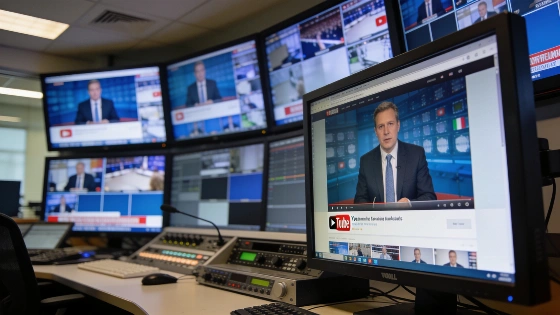
The BBC has begun a trial of its 24-hour news channel on YouTube. On 15 October 2026, the broadcaster started testing availability in the United Kingdom and United States, extending a service already available in Australia, Kenya, Nigeria and Poland to six reported markets. The stream carries BBC News programming, from political and business coverage to technology and cultural reporting, alongside breaking news and international coverage. The rollout builds on the BBC’s earlier strategy of testing markets outside the UK, including Australia, where the service is already available.
The aim is to reach audiences, particularly younger and digitally focused viewers, on platforms they already use. The livestream adds another route alongside BBC iPlayer and the BBC News website in the UK, with BBC apps and the corporation’s established international distribution also available. YouTube’s growing use on television sets adds to its value as a broadcast outlet: Ofcom figures cited in coverage show average daily viewing on TV sets rising from nine minutes per person in 2022 to 19 minutes in 2025. YouTube also reported more than 18 billion hours of news viewing on its platform in the first half of 2026.
The BBC’s international distribution builds on an existing global audience. A UK Department for Culture, Media and Sport review puts the corporation’s weekly reach at 453 million people across 40 languages, saying this provides “consistent exposure to British programming.” The review also ranks UK television content third globally for “travelability,” a measure comparing international demand with demand in its home market. Those figures appear in the DCMS soft power review.
Jonathan Munro, interim CEO of BBC News, reportedly told staff that the channel would increasingly focus on serving global viewers. He said growing commercial revenue from audiences outside the UK was impressive, arguing that every pound earned internationally reduced the need for domestic cost-cutting. The BBC’s wider funding picture includes about £3.8 billion in licence-fee income and £2.2 billion in BBC Group commercial revenue in 2024-25. The commercial figure is separate from licence-fee funding. At the time of the planning discussions, the BBC declined to comment on the specifics of its YouTube plans.
For viewers in the UK, watching a live television broadcast on YouTube still requires a television licence. The requirement applies to live viewing whether the signal arrives through broadcast television or an internet platform. This is distinct from ordinary on-demand viewing. The UK trial adds a digital distribution route without changing the licensing distinction between live broadcasts and on-demand content.
The move comes as UK media organizations face ongoing scrutiny and shifting business models. Recent regulatory actions have also shaped the field: the UK press regulator resolved most complaints in favor of the public, as detailed in a recent report on press complaints outcomes.