
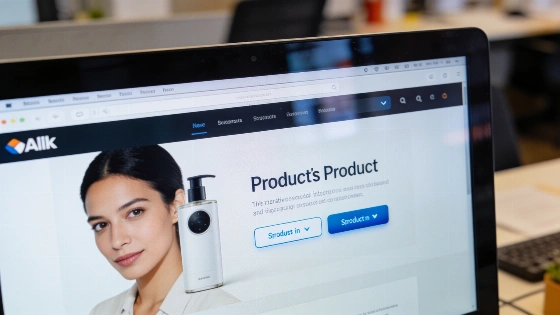
Amazon has launched a new wave of AI-powered display ads that let users interact directly with products across the open web, potentially changing how publishers and advertisers engage audiences and lead conversions. Announced at the Cannes Lions International Festival of Creativity, the rollout brings conversational prompts, previously limited to Amazon’s own properties, to major publisher sites such as The New York Times.
The display ads embed clickable questions in their creative, inviting users to ask for more details about featured products. Fabrice Rousseau, Amazon’s director of creative experiences, said the company uses data from Amazon.com and its shopping app to identify questions shoppers commonly ask. Instead of relying solely on conventional keyword targeting, the ads turn those questions into calls to action and personalize the experience with information Amazon has about the shopper.
Amazon reports that nearly 20% of shoppers who interact with a sponsored brand prompt continue the conversation, while 70% of those users are new to the brand. The continuation figure measures further engagement with the AI conversation, not a completed purchase or conversion rate. Amazon CEO Andy Jassy described the result as early. Conversation, clicks and sales mark distinct stages of the advertising funnel. Prompts draw on campaign data and product detail pages alongside brand-store content. Tapping one opens a conversation with Alexa for Shopping, where users can explore a product and ask follow-up questions before making a purchase. The experience can persist if they leave and later return to the browser.
The open-web format, called “responsive e-commerce creative” (REC), can automatically generate prompts for Sponsored Products and Sponsored Brands using product images. A shampoo ad, for example, might ask, “What hair types is this best for?” or “How long does one bottle typically last?” The REC placements described here are sold on a CPM basis, and Amazon says advertisers opting into AI automation see a 14% click-through rate. Other agentic features include price-drop notifications and alerts when a product reaches a target price set by the shopper.
These open-web display ads differ from sponsored prompts inside Amazon’s shopping assistant. Industry coverage describes the in-assistant prompts as connected to existing Sponsored Products and Sponsored Brands campaigns and generally available in the United States from March 2026, with a reported cost-per-click buying model. The placements and pricing models are distinct: the REC format described here is a CPM-based display product, while the reported CPC model applies to sponsored prompts within the assistant.
Industry coverage describes Amazon’s assistant as developing from Rufus into Alexa for Shopping, keeping product research and recommendations, sponsored discovery and purchasing within Amazon’s shopping environment. The broader shift is part of “agentic commerce,” in which AI systems can research and compare products before potentially transacting on a customer’s behalf. Brands may provide details about how their products differ and which customer needs they meet, including information about complementary items. Amazon’s system combines that material with catalog and storefront data to generate responses. In the related Branded Conversations format, brands supply content but do not write the assistant’s final answers.
Industry coverage says Amazon’s Branded Conversations rollout is scheduled for the United States in January 2027. The format is described as a multi-turn exchange in a brand’s visual style, with the opening sponsored prompt charged and follow-up turns free. Separately, industry reporting says Amazon opened advertising APIs to AI agents through an MCP server in February 2026, allowing advertisers to create or update campaigns and pull reports through structured commands. Together, the initiatives extend the company’s AI strategy from consumer-facing shopping to advertiser campaign management.
The expansion comes as publishers and ad-tech companies test AI-driven formats designed to capture user intent and keep audiences engaged. Several major publishers have adopted AI-powered Q&A ad formats, as detailed in this report on new AI search and ad technology deployments. Amazon’s approach is part of a wider debate about who controls product discovery as shopping shifts from keyword searches to conversational recommendations. The retailer operates the assistant and checkout, while outside agents could change or bypass parts of that advertising journey.
Amazon’s ad expansion is also unfolding amid continuing antitrust scrutiny of its marketplace practices. The U.S. Federal Trade Commission’s case against Amazon raises questions about marketplace conduct and advertising-auction practices. The agency’s announcement of its antitrust lawsuit sets out allegations that remain claims in litigation, not findings of liability. In AI-mediated shopping, questions include how sponsored influence is disclosed and how product information is selected. Responsibility for generated claims is another concern. Amazon has also cited security and privacy concerns in disputes over unauthorized shopping agents, including their identification and handling of customer credentials.
Founded in 1994, Amazon is one of the world’s largest technology companies, with more than 1.6 million employees globally as of 2026. Its advertising business has become a major revenue driver, generating more than $45 billion in annual ad sales, and continues to expand beyond Amazon-owned platforms into the broader digital advertising environment.








