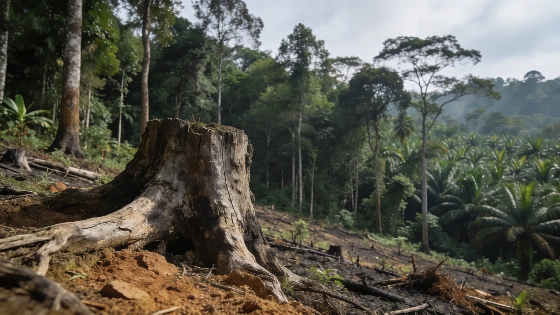
Haleon dropped Asia Symbol as a packaging supplier for its China operations after an investigation by AFP and The Gecko Project found that an Indonesian mill supplying Asia Symbol had processed wood from plantations where orangutan habitat had been cleared. The case shows what AFP’s new philanthropic model can support: reporting that takes time, specialist knowledge and money.
Wan-ifra reported that The Gecko Project brought AFP the story idea. Asia Symbol is a Chinese maker of “so-called carbon-neutral packaging.” The investigation’s documented consequence is clear. AFP is also developing a way to track outcomes beyond how widely its client media distribute a story.
Building the desk
AFP’s first initiative under the model is an Environment and Climate Legal Desk, the first major project under the agency’s Philanthropic Partnerships Initiative. Launched to expand AFP’s capacity for in-depth journalism with charitable support, the initiative backs a desk the agency describes as the first global media unit dedicated to sustained reporting on environmental and climate justice. Its remit includes environmental and climate law, litigation, legislation, corporate accountability and disinformation. Specialist reporters are meant to help AFP bureaus cover cases that busy general news teams may not have the capacity to handle, including SLAPP suits in the Philippines, lawsuits designed to silence critics.
At the time of Wan-ifra’s report, the desk had a founding editor, and AFP was hiring reporters in Asia and Africa, with Latin America also in the plan. AFP announced on November 10, 2026, that the desk had begun operations with support from Australia’s Minderoo Foundation and the UK-based Climate Change Collaboration, a grouping of The Aurora Trust, JJ Charitable Trust and Mark Leonard Trust. The agency says it will place dedicated journalists in key regions, including Asia, Africa and Latin America, and train journalists inside and outside AFP in environmental-law reporting. Securing the funding proved harder than setting the editorial strategy. AFP’s global environmental-law desk sits within its existing editorial structures and workflows, rather than operating as a separate publication. Karl Malakunas described the fundraising process to Wan-ifra as “a long, slow process.” He said, “It’s definitely harder, the fundraising element than the editorial element. We’re not going to sugarcoat that.”
The desk’s journalism is intended to reach AFP’s more than 4,000 clients and the agency’s social-media platforms. AFP’s wider reporting network operates from 210 locations worldwide; the agency has approximately 2,400 staff representing 100 nationalities and produces coverage in six languages. Its planned reporting will cover legal battles, legislative developments, corporate accountability, climate litigation and cases affecting underreported communities, while building expertise among AFP journalists and external reporters.
Who pays and who decides
The model adds philanthropy to AFP’s existing revenue base: about a third comes from the French state, while two-thirds comes from more than 4,000 clients. According to Wan-ifra’s account, the charitable funding is aimed at work grouped under “Future of the planet” and “Future of societies.” Malakunas said editorial independence must remain “sacrosanct.”
AFP’s safeguards are meant to keep grantmakers from directing coverage. The agency published a code of ethics on day one, and Malakunas told Wan-ifra that foundations “don’t have direct access to our journalists.” He said AFP spent time defining its own priorities rather than following funders’ preferences. The limit for any single funder is “no more than 25 or 30%,” he said, describing philanthropy as “fickle” and the sector as “opaque.”
That funding challenge has surfaced elsewhere in nonprofit journalism. A Uncloseted Media funding report described a donor-heavy model at an outlet that has raised more than $1 million since 2024. AFP’s established client base gives it a different starting point, but the agency still has to secure grants without giving up editorial control.
Measuring the work
Wan-ifra reported that AFP was building its first impact tracker. The measures go beyond distribution reach. Malakunas said the agency wants to know whether reporting is cited by civil society or lawmakers, and whether it leads to anything. Journalists will log outcomes themselves as stories move through AFP’s media clients, then share results with funders.
A separate AFP climate-news partnership offers a measure of philanthropic distribution beyond the new legal desk. Covering Climate Now reported that, with support from the Rockefeller Foundation, it gave 21 Global South news outlets free access to AFP’s climate and energy feed. Over 12 months, those outlets reached more than 457 million people and published 2,875 climate-related stories; each outlet published an average of 137 additional climate stories. Coverage included UN climate negotiations, extreme weather, pollution’s public-health effects and green technology.
Malakunas joined AFP in Hong Kong 25 years ago after working as a journalist; he is Emmy-nominated and Walkley Award-winning. He told Wan-ifra that breaking news was “in my veins,” while deeper reporting had long appealed to him. In the Philippines, he expanded a 700-word article about environmental defenders in Palawan into a 90-minute documentary. The film took 10 years and was largely funded by foundations. In March 2025, AFP’s global news director asked him to bring that approach into the agency.
For Southeast Asian newsrooms facing harassment, rising costs and barriers to US and European foundations, Malakunas’s advice was to commit resources and train staff. “It’s extremely difficult, but it is possible,” he told Wan-ifra. He urged editors to make room for reporters ready to do the work, even without additional funding: “allocate some space for one or two or whoever those people are.”
AFP’s announcement of the desk described its purpose as sustained, multimedia reporting that simplifies complex legal disputes, amplifies underreported voices and scrutinises environmental law. The agency’s distribution network gives that specialist reporting access to its client outlets and social-media audiences.