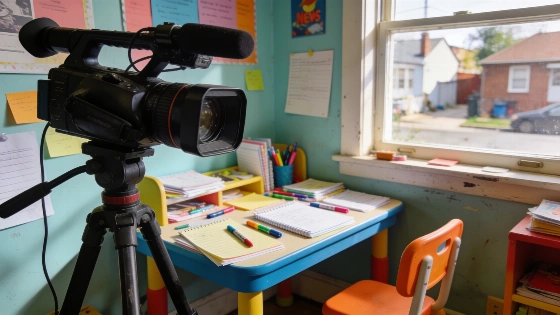
Mirror Indy is launching the Kid Correspondents program, giving young people a platform to report on their neighborhoods with humor and putting them at the center of community storytelling. For publishers and editors looking to diversify voices and engage audiences, the initiative offers a model for bringing perspectives often overlooked by traditional newsrooms into local coverage.
Rather than relying solely on adults to describe neighborhood events and issues, Mirror Indy is inviting kids to share what matters to them. The program aims to capture young people’s observations and concerns, including details and dynamics adults may miss. Giving participants room to shape their stories can connect local audiences with experiences that might otherwise go unreported.
The Kid Correspondents are encouraged to use their own voices and styles, mixing reporting with a humorous, personal touch in short-form video. That approach has parallels in other youth-reporting programs: Hessischer Rundfunk’s “young reporter” initiative, for example, supports 16- to 20-year-olds in Hesse as they report on their regions with professional journalists. The broadcaster describes participants as young people who become reporters themselves, as outlined in its young reporter program.
Regular production can give youth reporting a defined audience and rhythm. In Selma, California, Jackson Elementary students produce a weekly “Husky News Network” about school events for classmates and families. They take on reporting and production, then present the news. Busan Metropolitan City offers a larger civic-media example: its “Little Busan Reporters” program includes 314 elementary-school students in grades four through six, while its quarterly publication is issued in 160,000 copies per edition and distributed to 302 elementary schools, libraries and bookstores.
Humor and personality can make stories inviting, but they do not replace the reporting standards required when coverage involves real people or public institutions. Voice of OC’s Tracy Wood Fellowship tells young reporters to “set aside their personal opinions,” remain accountable, provide context and present stories fairly. Those principles, set out in the fellowship’s editorial guidance, offer a useful structure for youth-led coverage: keep the format lively while treating reporting with care.
The experiment reflects a wider effort to rethink newsroom formats and audience engagement. Youth-driven reporting can make local coverage more accessible while giving young people a direct role in telling community stories. Major industry events have also highlighted efforts to innovate in local journalism. The World News Media Congress recently announced Stockholm as its next host city for discussions on digital change and sustainable models. Industry leaders are focusing on new ways to connect with communities and adapt to changing audience expectations.