A new blueprint aims to help brands adapt as AI agents begin making purchases for consumers. The playbook focuses on discoverability, seamless transactions, and performance tools.
Media and commerce professionals now face a new set of challenges as Microsoft Advertising introduces its agentic commerce blueprint, designed to help businesses, retailers, and developers prepare for a future where AI agents make purchases on behalf of consumers. The "Agentic Playbook" outlines how companies can optimize their product data, streamline checkout processes, and use new tools to improve campaign performance as AI-driven shopping becomes more common.
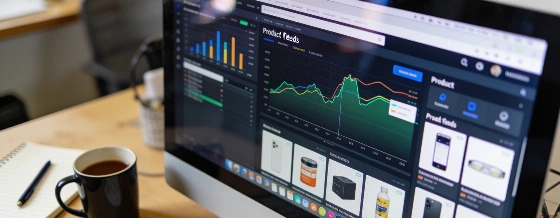
The blueprint, presented during an online briefing with marketers, emphasizes three priorities: ensuring products are easily discoverable by AI agents, making the purchase process frictionless, and providing robust optimization tools. Microsoft recommends a 90-day approach for marketers: the first 45 days focus on preparing product feeds and checkout systems, while the following 45 days are dedicated to content optimization based on collected data.
Microsoft Copilot, which operates on the Universal Commerce Protocol (UPC), connects with major retail partners such as Target, Ulta Beauty, and Stripe. The UPC framework, with founding partners including Google and Shopify, enables Copilot to integrate with a wide range of retail systems. According to Bain & Company, agentic ecommerce could represent 15% to 25% of the U.S. market by 2030, signaling significant shifts in consumer behavior and marketing strategies.
On the technology front, Microsoft has begun rolling out "AI Max," a suite of features for search advertising campaigns. AI Max enhances campaign reach by matching search terms beyond traditional keyword lists, leveraging campaign assets and website content to generate and test ad variations, and dynamically selecting the best combinations at auction time. The system also introduces URL expansion, directing users to the most relevant page on a brand’s website based on intent, rather than a static landing page.
Advertisers importing campaigns from Google will see their settings transition smoothly into Microsoft’s platform with AI Max enabled. Microsoft also announced plans to remove “Max CPC” controls starting October 1, encouraging advertisers to adopt conversion-based and automated bidding strategies. Existing campaigns with Max CPC limits will retain them for now, and some portfolio and alternative bidding strategies will remain available.
As AI-driven commerce evolves, transparency and value remain top concerns for advertisers. Industry discussions about agentic AI and supply-path optimization continue, as highlighted in a recent analysis of how AI is reshaping media buying and the balance between efficiency and control in this related report.
Microsoft Advertising, a division of Microsoft Corporation, serves a global client base with digital advertising solutions across search, display, and commerce. As of 2026, Microsoft reported annual advertising revenues exceeding $12 billion, with its platforms reaching hundreds of millions of users worldwide. The company continues to invest in AI-powered tools and partnerships to expand its influence in the digital marketing and ecommerce sectors.