
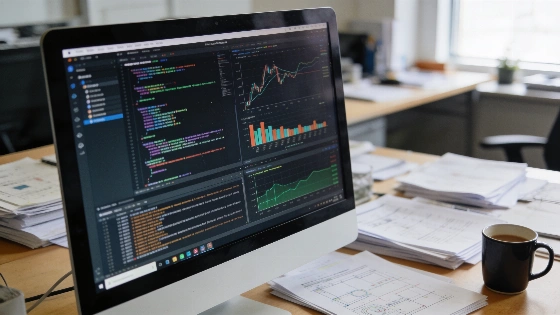
Marketers need more than a record of the past. They need to know what’s coming. Lifesight has made its Horizon forecasting engine open source, publishing its code and benchmarks on GitHub along with its methods. For years, marketing forecasting has been a black box. Lifesight wants that to end: anyone can check the predictions that shape budgets, then adapt or challenge them.
Horizon is built to do more than run a single model. It runs several forecasting models at once, then blends their results using ensemble forecasting. This method is common in academic research but rare in commercial marketing analytics. By combining models, Horizon aims to catch signals a single model might miss. That can help avoid overfitting to old trends or missing new demand shifts.
Most marketing mix models (MMMs) explain the past. They show which channels drove sales or how much revenue came from media or pricing. But Rajeev Nair, Lifesight’s co-founder and chief product officer, says the real value lies in forecasting. Without strong forecasts, even the best measurement tools hit a wall. Brands often find that more than half their revenue comes from baseline factors such as seasonality and customer loyalty, including repeat purchases, rather than marketing pushes. Older MMMs can’t project these baseline effects into the future, especially when conditions change quickly.
Dr. Ron Berman, associate professor at the Wharton School and the first member of Lifesight’s new Scientific Advisory Council, says measurement models have limits. They work for small adjustments, but forecasts can fall apart if marketers double budgets or shift strategy based on old data. Seasonality alone can undermine predictions when models aren’t built to account for it. Berman’s role is to ensure Lifesight’s methods receive peer review and stay grounded in research relevant to marketers, not just economists or epidemiologists.
Making Horizon open source goes beyond a technical change. Lifesight wants marketers to trust forecasting and use it in their measurement stack, whether they rely on Lifesight’s MMM, Google’s Meridian or their own tools. The company is betting on transparency. Other platforms, including Meta’s Robyn and PyMC-Marketing, have also opened up their tools, often with their own data interests. Transparency is rising across the industry. There have been clear shifts in how platforms handle data visibility.
Horizon is built on existing open-source libraries, not a secret breakthrough. Nair says the difference lies in how it works. Brands can configure forecasts, then tune and use them without being locked into one vendor or method. Lifesight is open to rivals building on Horizon. The company’s view is simple: measurement should never be a black box. The value lies in making forecasting open and useful for decision-makers.
Lifesight has published the code with documentation and benchmarks. The company wants others to check its work and take part. This marks a shift from closed, secretive tools toward open new idea subject to peer review. Marketers can now test and adapt the tools that guide their spending instead of simply taking someone’s word for it.
Horizon also challenges the industry’s habit of hiding forecasting logic. Marketers looking to move beyond backward-looking analysis now have a transparent, research-backed option that works with any measurement system. The test is whether brands and agencies use this chance to rethink how they forecast demand and spending. In a market where trust and flexibility matter, open-source forecasting is becoming a standard, not a bonus.








