
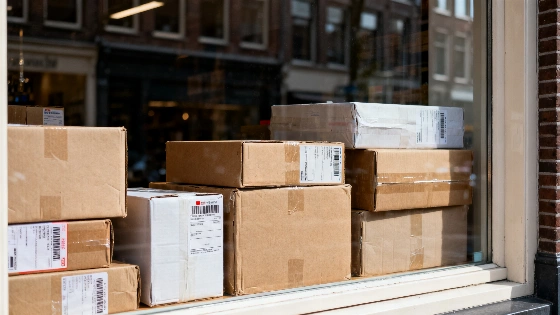
The Mystery Parcel Store in Amsterdam lets customers choose unopened Amazon packages, pay by weight, then open them on the spot, often in front of a street crowd. A firsthand account from this week describes a storefront concept built around surprise and spectacle for social media.
Information from 404 Media, the store is filled with unopened Amazon packages of various shapes and sizes. The process is designed to be shareable, with participants’ photos posted to the store’s social media channels. The format taps into a wider resale market for returned e-commerce goods, including overstocked or undeliverable items, which are often sold in bulk rather than individually inspected. Some sellers distinguish between manifested lots, with item lists, and unchecked lots sold “as is” without a warranty, as outlined in Reusalia’s overview. In a mystery-parcel shop, that uncertainty becomes part of the entertainment: customers pay without knowing exactly what they will take home.
One editor observed the scene but hesitated to join, noting that the public unboxing and instant online exposure made the experience less appealing. The prospect of discovering a valuable item was tempting, but watching a group reveal mostly plastic waste dampened the excitement. The editor considered targeting heavier boxes marked with lithium-battery labels, hoping for a better outcome, but a label alone cannot establish whether a parcel’s contents work or have resale value. The gamble also carries the risk of ending up with unwanted goods or logistical hassles.
The wider waste figures offer context, though they do not measure the impact of mystery-parcel shops specifically. Eurostat reported that the EU generated 81.5 million tonnes of packaging waste in 2024, or 181 kilograms per person. Plastic made up 19.9% of that total, and 42.4% of plastic packaging waste was recycled, according to Eurostat’s 2024 figures. The data cover packaging from across the economy, not just e-commerce returns. They nevertheless underline the scale of the packaging challenge surrounding a retail experience built around parcels and their contents.
This mix of chance and performance, amplified by digital sharing, offers a glimpse into how physical experiences are being shaped for online audiences. For content creators and publishers, it raises questions about spectacle and the communities around unpredictable viral moments, and whether the thrill of opening a mystery box outweighs the prospect of an unwanted purchase and its packaging.








