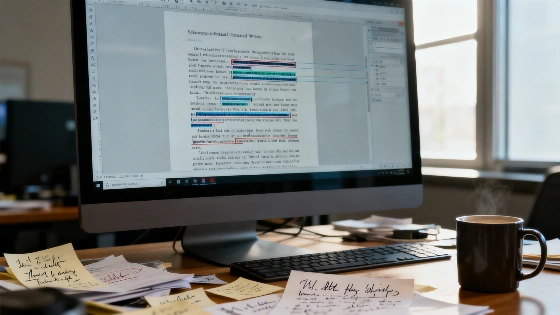
Writers and editors face a critical choice as AI tools become more powerful in content production. Jim VandeHei, co-founder of Axios, has spent the past year experimenting with AI to improve his own writing process, focusing on how these technologies can support, rather than replace, human creativity and editorial rigor.
VandeHei warns that relying on AI for effortless content creation leads to generic, uninspired results. He emphasizes that writers who let AI do their thinking risk losing originality and critical skills. Instead, he advocates for a disciplined approach: setting clear standards for AI output, defining personal writing style, and using AI as a tool to challenge and refine ideas.
He outlines practical steps for integrating AI into editorial workflows. First, he programs AI models with his own writing principles, instructing them to prioritize clarity, brevity, and fact-based analysis. He also uploads examples of his best work, ensuring the AI understands his voice and editorial priorities. This process, he says, helps maintain consistency and quality across drafts and edits.
VandeHei has pushed his AI experiments further by developing advanced skills within platforms like Claude and ChatGPT. He creates specialized agents for fact-checking, data validation, and style enforcement, and interacts with these agents in iterative feedback loops. Over time, he reports, the AI becomes more adept at mirroring his editorial standards and even proposes improvements he might adopt.
He also tests AI’s capabilities in real-world publishing scenarios, such as his Axios C-Suite newsletter for executives. Here, AI projects and agents analyze his previous columns, scan high-quality sources, and draft new ideas in his style. While these outputs are never ready for publication without human review, VandeHei finds them valuable as starting points and enhancers for his own work.
In a recent experiment, he used voice mode in Claude to brainstorm and organize thoughts while training for a Kilimanjaro hike. The AI captured his ideas, challenged assumptions, and helped structure a draft column, resulting in a hybrid product that blended his thinking with AI-driven editing.
VandeHei’s approach highlights the importance of transparency and editorial control when using AI in journalism. He notes that Axios discloses its AI practices to readers and maintains high standards for accuracy and originality. For those interested in how other publishers are testing AI in editorial workflows, India Today recently piloted a system to predict audience engagement before publishing, as reported here.
VandeHei encourages media professionals to experiment with AI thoughtfully, using it to enhance-not replace-their editorial judgment and creative process.