
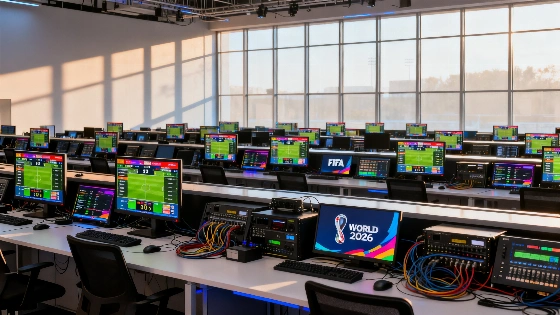
Flashscore set a target of adding 27 million new users through its 2026 FIFA World Cup push. The tournament ran from June 11 to July 19 across North America, with matches in the United States as well as Canada and Mexico. That schedule gave digital sports platforms more live events and a broad international audience to engage. For publishers and content professionals, Flashscore’s strategy shows how platforms can use real-time data alongside editorial coverage, then bring users back with personalized notifications during a major sporting event.
Organized across 16 host cities, the tournament was the first men’s World Cup to feature 48 teams and included 104 matches, compared with 64 in the traditional 32-team format. The United States hosted 78 fixtures across 11 cities, while Canada and Mexico hosted 13 each. The expanded schedule created more opportunities for match updates and standings coverage, alongside team-specific alerts and related editorial content. The group stage comprised 12 groups of four, with the top two teams in each group and the eight best third-placed teams advancing to a 32-team knockout phase. FIFA’s tournament information sets out the event’s dates, format and host-country structure.
Originally launched in 2006 as a live sports scores site, Flashscore has grown into a global sports media platform with 125 million monthly active users and 200 million app downloads, information from company figures cited in its growth strategy. Its editorial operation includes 150 journalists and 180 audio commentators, producing content in 31 countries. Acquisitions, including Spanish football platform BeSoccer, have added more than 30 million monthly users and strengthened its presence in football-focused markets.
Under chief digital content officer Alan Záruba, Flashscore introduced a news section in 2021 that combines live match data with multimedia editorial content. Záruba said many users arrive for scores and statistics, then discover news through linked match pages and tags, with personalized push notifications helping surface stories. The platform segments audiences by favorite teams and players, then uses behavior to tailor content and alerts to individual interests.
A Liverpool supporter, for example, might receive updates about club players and recent results, along with player ratings and weekly news features relevant to the team. The approach is designed to deepen engagement and give users reasons to return throughout a tournament, as matches and standings change from day to day.
Football remains Flashscore’s leading sport, with nearly two-thirds of users primarily following football content. Tennis and basketball account for 10% and 9% of usage, respectively. The company reports 16 million new users during the 2022 World Cup in Qatar. It added 20 million during the Euro and Copa América in 2024, then gained 5 million from the 2025 Club World Cup.
Flashscore’s World Cup strategy also focused on creators and influencers as the company sought to extend its reach beyond scores and statistics. Its plan paired live coverage with data-led news, then used personalized experiences to build on earlier tournament gains and attract fans following national teams across the competition’s three host countries.
Other digital platforms also rolled out World Cup features. Meta used themed content and live updates on Threads, then added similar coverage across social media and social media to compete for audience attention during the tournament. That gave fans more services for following matches and related discussion.
Flashscore’s approach shows how platforms can pair editorial content with live data, then use personalization to engage and retain audiences. The 2026 competition’s 104-match schedule and 16-city footprint created a larger inventory of live sporting moments to cover, from match pages and score alerts to team-focused stories, with standings updates along the way.
Founded in 2006, Flashscore now operates in 31 countries, with a combined editorial and audio team of more than 300 staff. Its app has been downloaded 200 million times, while acquisitions have expanded its international footprint, particularly in football markets.








