
Simply Wall St’s screen identified three companies and surfaced 94 additional listed names tied to AI cloud and data center infrastructure. The catalyst is Anthropic’s potential US$1.4 trillion IPO valuation alongside large AI compute commitments; the valuation remains potential, not a completed listing. On November 10, 2026, Anthropic’s filing set a proposed share-price range of US$70 to US$78 and a primary offering that could raise as much as US$64.4 billion. Reuters calculated that the range implied a valuation of up to about US$1.02 trillion on outstanding shares, compared with roughly US$1.4 trillion on a fully diluted basis, including employee options, restricted stock and other securities. The proposed IPO terms remained subject to the offering process.
Anthropic’s filing also disclosed computing commitments exceeding US$895 billion. About US$448 billion was expected to be incurred by the end of 2030, including approximately US$70 billion during the 12 months ending September 2027. These are future infrastructure commitments, not an equivalent amount of immediate cash spending. Reuters reported that the obligations involve computing capacity and partners including Amazon and Alphabet’s Google, tying the proposed expansion to cloud and data-center capacity, as well as chip and networking suppliers.
The names offer different forms of exposure. Nokia Oyj supplies mobile and fixed network systems worldwide, along with cloud networking and related intellectual property. For the second company, Cloudflare, the case centers on protecting and routing AI-heavy application traffic, including through edge computing.
Simply Wall St’s analyst-consensus narrative points to Nokia’s high-capacity optical and IP networking as a fit for cloud and AI workloads. It says the company’s AI & Cloud net sales more than doubled year over year to €446 million in Q2 2026, while orders reached €2.8b. Those figures show demand in that quarter; they do not establish how long it will last or what it will mean for margins.
Supply-chain pressure is one risk the Nokia narrative asks investors to weigh against that demand. The source also lists €8.7b from Network Infrastructure and €12.1b in segment adjustments, figures whose relationship is not explained in the supplied material. That makes them difficult to use as a clean comparison of operating performance.
Cloudflare’s infrastructure role is closer to the security and traffic-management layer than to the data center hardware itself. DaneDruss, an investor in the Simply Wall St Community, describes the company’s exposure in terms of internet security and network protection, as well as services for identity and traffic. Cloudflare’s Connect 2026 materials said more than 51% of web traffic was already automated and that multiplying AI agents could increase load on origin servers by two to five times. The company describes its response as software and network services, including origin protection and traffic routing; these traffic figures do not establish how usage will translate into earnings. The Connect 2026 materials also describe Cloudflare Gateway as a secure web gateway with TLS inspection capabilities.
That distinction matters: more AI-related traffic does not, on its own, establish stronger earnings. A separate valuation report covered concerns around Cloudflare’s valuation after a strong quarter, offering relevant context without resolving the traffic-mix question raised here.
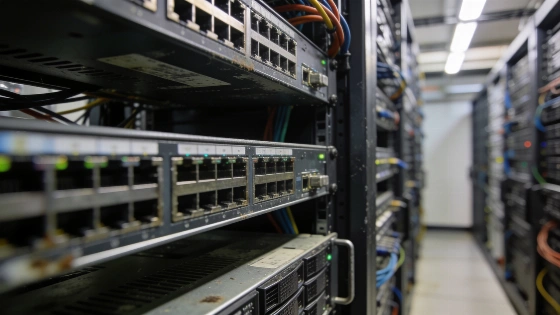
Accton Technology represents the equipment side of the screen. Its Computer Networks division generated about NT$310.6b, supporting workloads for cloud and data center customers. The Taiwan-listed company sells networking hardware worldwide to carriers and enterprise customers, with hyperscalers also among its customers; its exposure includes switches and edge equipment used to build data-center network fabrics.
For Accton, the supplied analysis points to future AI-related capital spending as a factor that could affect pricing power and cash conversion. The screen’s three selections are examples rather than a complete investment universe, and the article does not establish that any of them will benefit from Anthropic’s plans. Simply Wall St says its analysis uses historical data and analyst forecasts, is AI-assisted, and is not financial advice or a recommendation to buy or sell any stock.








