
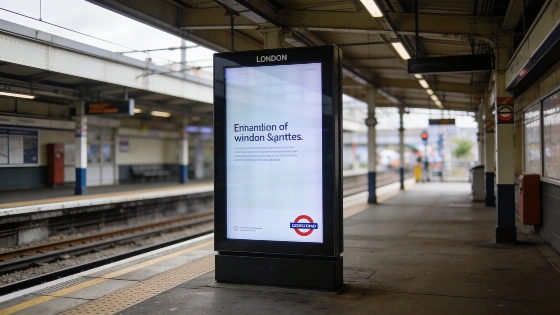
Walk through any major city and you’ll see the disconnect: brands spend billions to chase individuals online, yet the real battleground is where those people actually see and process ads. Data-driven targeting has lulled the industry into thinking identity and clicks are all that matter. But the ground truth is messier. Where an ad appears-on a phone in a quiet room or on a billboard in a packed station-can swing a campaign from hit to miss.
In the UK, behavioral advertising using cookies, conversion tags, and tracking pixels generally requires user consent; these technologies cannot be used for ad tracking based solely on 'legitimate interest'.
Picture a commuter half-scrolling through their phone versus that same person standing on a crowded train platform, surrounded by digital billboards. Both get tagged as “commuter” in the data, but the message lands differently. The London Underground, with 1.216 billion passenger journeys projected for 2024/25, shows how stations, dwell times, and ad formats shape what people notice and remember. The physical setup can boost recall or bury a campaign in background noise.
The legal framework for digital targeting in the UK includes the UK GDPR and the Privacy and Electronic Communications Regulations (PECR), with the latter specifically governing the storage and reading of information on devices, including cookies and comparable identifiers.
Years of refining search, purchase, and browsing-based targeting have pushed the industry to optimize for what’s measurable, not what actually drives results. Dashboards look sharp, but they flatten the messy reality of environment and mindset. Planners keep chasing logged clicks, but rarely ask if those clicks came from a distracted midnight scroll or a high-focus moment in public.
Attention metrics are now in the spotlight. IPA effectiveness research argues that earning attention-by matching creative, environment, mindset, and objective-matters more than buying exposure time. Still, media planning often splits audience selection from creative and environmental choices, missing the interplay that shapes real-world outcomes.
Out-of-home (OOH) advertising’s momentum proves the point. UK OOH revenue reached £402.6m in Q2 2026, up 12.7% year on year. Digital OOH climbed 14.6%. This isn’t just about channel growth. As media gets more private and screen-based, the places where people actually see ads remain critical for commercial impact.
Publishers and marketers face a blunt reality: algorithms can profile who someone is and what they might want, but they can’t capture the full moment when an ad is seen. The physical, social, and emotional context often decides if a message gets noticed or ignored. As previous reporting shows, advertisers now demand harder proof of impact, and context is moving to the center of those demands.
Media teams who treat targeting as the finish line are missing the operational challenge. The real work starts after the audience is picked: where, when, and how will the message actually reach them? In a world of fractured attention and shifting environments, those who grasp the power of context will leave dashboard-driven rivals behind. The next industry leap will come from focusing on the physical and psychological realities that shape every ad moment.








