
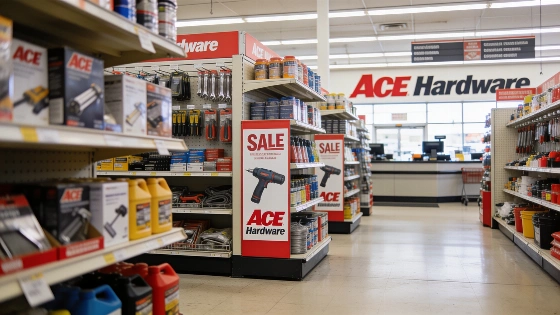
Retailers seeking to grow loyalty and revenue during the mid-year deals rush are rethinking their approach to Prime Day. Ace Hardware has chosen not to compete directly with Amazon. Instead, it launched its own Ace Rewards Days event to capitalize on the surge in consumer shopping activity.
The wider retail market helps explain the appeal of the strategy. Adobe Analytics reported that consumers spent $26.4 billion online across U.S. retailers during Amazon’s four-day June 2026 Prime Day event, up 9.3% year over year. That figure measures spending across online retail, not Amazon’s own sales. It shows how major deal periods can spur activity across competing shopping channels.
Molly Hjelm, general manager of Ace’s retail media network, said the company’s four-day Ace Rewards Days event in late June produced some of the year’s highest traffic and conversion rates. She said Prime Day has fundamentally changed shopper expectations, creating a new retail moment outside traditional holidays. That shift gives retailers a window to reach consumers who are actively searching and ready to buy.
Ace Rewards Days is built around the company’s 60 million-member loyalty program, which Hjelm described as central to Ace’s commercial strategy. The event is the company’s top annual driver of new sign-ups, expanding the reach of its retail media network. Launched in 2025, the network connects brands and vendors with Ace’s audience across digital and in-store channels.
Hjelm noted that the traditional purchase funnel collapses during peak deal periods. Shoppers move rapidly from awareness to conversion, often revisiting products multiple times in a short span. Vendors must run full-funnel campaigns and adjust parameters to match the elevated traffic during Rewards Days, she said. Ace begins promoting deals to loyalty members up to a month in advance, then intensifies messaging as the event nears. Some offers come out early to encourage purchases ahead of the basic window.
Hjelm acknowledged concerns that such events may train shoppers to delay purchases until peak moments, but said retailers who ignore these periods risk losing market share. Ace’s cooperative structure, with more than 5,200 independently owned stores, adds complexity to rolling out partnerships. The company has expanded last-mile delivery through DoorDash and Uber Eats, with Instacart also available. These services let customers move from discovery to doorstep delivery in as little as 15 minutes.
Ace is also investing in product findability within large language models, aiming to appear in AI-driven recommendations. Hjelm said traditional on-site ad formats may lose value if AI agents lead more purchases, but a presence in these new channels is increasingly impressive.
Even the most loyal customers still spend a impressive portion of their budget elsewhere, Hjelm pointed out. Ace Rewards Days is designed to reward existing members and attract new ones, while the retail media network gives merchants and vendors a tool to lead sales during basic periods.
Promotional activity extends beyond the summer sales window. Adobe Analytics reported $9.86 billion in U.S. online spending across retailers during Amazon’s two-day Prime Big Deal Days event on October 6 to 7, 2026, an 8.5% increase from $9.09 billion during the comparable 2025 event. The reported dataset covered more than 1 trillion visits to U.S. retail websites. It tracked 100 million products across 18 product categories, offering a broad view of deal-period shopping rather than a measure of Amazon sales alone.
Retailers are not alone in adapting to new digital realities. Regulatory and technological shifts are also reshaping the industry, as publishers and platforms respond to changes in audience behavior and data practices. A recent UK bill, for example, aims to increase transparency around AI bots scraping content, a move supported by publishers concerned about revenue and trust. More details are available in this report on UK efforts to regulate AI web scraping.
Founded in 1924, Ace Hardware operates as a cooperative of independently owned stores. As of 2026, the company has more than 5,200 locations and a loyalty program with 60 million members. Its retail media network, launched in 2025, connects brands with customers across digital and physical channels, supporting vendor campaigns and in-store promotions.








